
Back to products
AllZone-SAC100Category J

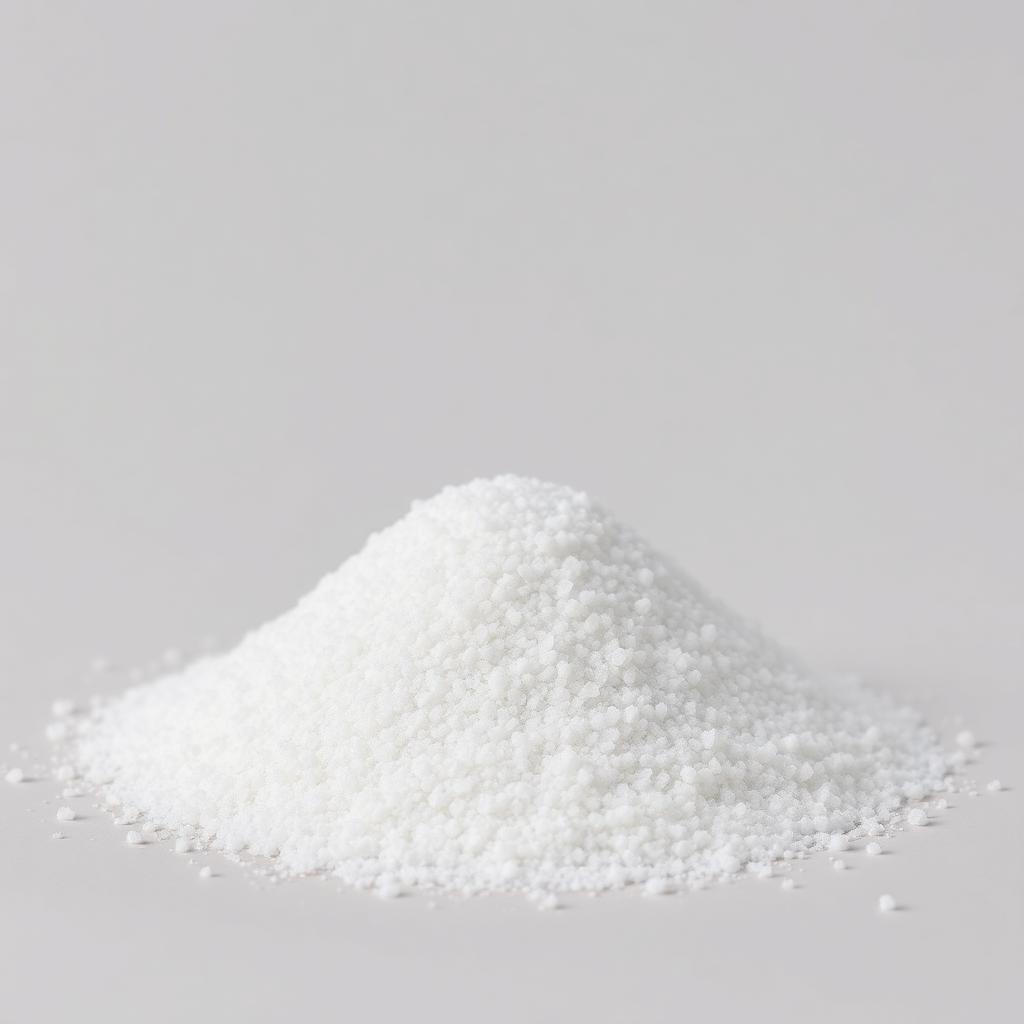
Soda Ash Dense & Light (Sodium Carbonate)

99.2% pure Na2CO3 for glass container manufacturing, industrial water treatment and metallurgical smelting.

Bulk Industrial Chemicals REACH TDS SDS

Logistical Specifications & Compliance

Zero Customs-Risk · Plastic-Pallet Mandate

  • Logistics Status: 24-to-48 Hour Local GTA Warehouse Dispatch.
  • Packaging Standard: Shipped 100% exclusively on sterile, defect-free, injection-molded PLASTIC PALLETS.
  • Compliance Highlight: 100% quarantine-exempt from CBSA/CFIA regulations — eliminating customs hold, wood-pest infestation, and particle-contamination risks of standard wooden pallets used by competitors.

Technical Data Sheet

TDS · AllZone-SAC100

Product form

Dense or light granules

Appearance

White free-flowing granular powder

Carrier / matrix

Sodium carbonate — Na2CO3

Key Physical & Chemical Properties

Na2CO3 purity≥ 99.2 %
NaCl content≤ 0.50 %
Iron (Fe)≤ 30 ppm
Loss on heating (250 °C)≤ 0.80 %
Bulk density (dense)1.00 – 1.10 g/cm³
Bulk density (light)0.50 – 0.60 g/cm³

Recommended dosage

Per process specification.

Processing temperature

Decomposes above 851 °C

Packaging

25 kg paper-PE bag, 1000 kg FIBC, or 25 MT FCL bulk.

Shelf life

24 months from production date in unopened original packaging.

Storage

Store dry below 35 °C. Hygroscopic — keep tightly closed.

Target Applications

  • Container & flat glass manufacturing
  • Industrial water softening
  • Detergent and soap formulations
  • Metallurgical and pulp processing

Key Features

  • High bulk density (dense) for glass batch consistency
  • Low iron content — premium optical glass grade
  • Solvay-process refined — globally consistent purity
  • Available dense or light grade

Safety Data Sheet · GHS / OSHA HazCom / WHMIS 2015

SDS · AllZone-SAC100

Signal word

Warning

Eye Irrit. 2.

GHS07 — Exclamation mark
§ 1Identification
Product code
AllZone-SAC100
Product name
Soda Ash Dense & Light (Sodium Carbonate)
Product use
Industrial raw material — Building & Construction.
Restrictions
Industrial use only. Not for direct consumer sale unless explicitly labelled food/feed grade.
Supplier
All Zone Chem Distribution Inc.
Address
Ontario, Canada
Technical contact
technical@allzonechem.example · +1 (000) 000-0000
Emergency
CHEMTREC +1 800 424 9300 / CANUTEC +1 613 996 6666
§ 2Hazards Identification
GHS classification
Eye Irrit. 2.
Signal word
Warning
Pictograms
GHS07 — Exclamation mark
Hazard statements
H319 Causes serious eye irritation.
Precautionary statements
P264 Wash thoroughly after handling. P280 Wear eye protection. P305+P351+P338 IF IN EYES: Rinse cautiously with water for several minutes. P337+P313 If eye irritation persists: Get medical advice.
§ 3Composition / Information on Ingredients
Mixture
Engineered bulk industrial chemicals based soda ash dense & light (sodium carbonate).
Carrier
Bulk Industrial Chemicals compatible polymer.
Sodium carbonate (CAS 497-19-8)
≥ 99.2 %
§ 4First Aid Measures
Inhalation
Move to fresh air. Get medical advice if discomfort persists.
Skin contact
Wash with soap and water. Get medical advice if irritation persists.
Eye contact
Rinse cautiously with water for at least 15 minutes, holding eyelids open. Remove contact lenses if present. Seek immediate medical attention.
Ingestion
Rinse mouth. Do not induce vomiting. Seek medical advice if discomfort persists.
Hot melt burns
For pellet-form products processed at melt temperature: cool affected area with cold water. Do NOT peel solidified polymer from skin — seek medical attention.
§ 5Fire-Fighting Measures
Suitable extinguishing media
Water spray, dry chemical, CO2, foam.
Unsuitable media
None known.
Special hazards
Combustion may produce CO, CO2 and dense black smoke. Polymer melt drips during fire.
PPE for firefighters
Self-contained breathing apparatus (SCBA) and full protective gear.
§ 6Accidental Release Measures
Personal precautions
Wear PPE per Section 8. Avoid generating dust. Ventilate area.
Environmental precautions
Prevent entry into drains, waterways or soil. Notify authorities if significant release.
Cleanup
Sweep or vacuum spilled material into labelled container for recycling or disposal.
§ 7Handling & Storage
Handling
Handle in well-ventilated areas. Avoid generating dust. Use appropriate PPE.
Storage
Store dry below 35 °C, away from direct sunlight and ignition sources.
Incompatible materials
Strong oxidizers.
§ 8Exposure Controls / Personal Protection
Engineering controls
Local exhaust ventilation at material transfer and melt-processing points. Maintain dust below regional OEL.
Respiratory protection
Dust mask if fines / dust generated.
Hand protection
Heat-resistant gloves when handling molten polymer; cotton gloves for cold pellets.
Eye protection
Safety glasses with side shields; chemical splash goggles when handling powders or molten material.
Body protection
Long-sleeve work clothing. Full chemical apron for corrosive products.
Exposure limits
Follow nuisance-dust limits (10 mg/m³ total, 5 mg/m³ respirable).
§ 9Physical & Chemical Properties
Physical state
Solid pellets / powder
Color
White / off-white / pre-colored
Odor
Odorless to faint polymer odor
pH (1 % solution)
11.5
Melting / decomposition
Polymer melt 110 – 250 °C (matrix dependent)
Flash point
Not applicable (solid article)
Solubility (water)
Soluble
Density
0.9 – 2.2 g/cm³ depending on grade
§ 10Stability & Reactivity
Stability
Stable under normal storage and handling conditions.
Conditions to avoid
Excessive heat, ignition sources, prolonged UV exposure.
Hazardous decomposition products
CO, CO2, polymer fragment volatiles. Azodicarbonamide additionally releases NH3, N2.
§ 11Toxicological Information
Acute oral toxicity (LD50, rat)
Not classified (> 2000 mg/kg expected)
Skin irritation
Not classified for solid article in supplied form.
Eye irritation
Causes serious eye irritation.
Respiratory sensitization
Not classified.
Carcinogenicity
Not classified.
Mutagenicity / reproductive tox.
No known effects based on current data.
§ 12Ecological Information
Aquatic toxicity
Not classified — substance is essentially inert in water.
Persistence
Inorganic salt — fully soluble, mineralizes.
Bioaccumulation
No bioaccumulation potential expected.
§ 13Disposal Considerations
Product disposal
Dispose in accordance with local, provincial, state and federal regulations. Recycle polymer fractions through certified plastic recyclers where possible.
Packaging disposal
Recycle empty bags / liners after thorough emptying.
Waste codes
Non-hazardous solid waste (EWC 07 02 13 typical).
§ 14Transport Information
Status
Not regulated for transport under DOT / IATA / IMDG / ADR / TDG.
§ 15Regulatory Information
REACH (EC 1907/2006)
All components registered or exempt. No SVHC listed above 0.1 % w/w.
RoHS (EU 2011/65)
Heavy metals < 1000 ppm (Pb, Hg, Cr⁶⁺) and < 100 ppm (Cd).
Food contact
Not intended for food-contact applications.
WHMIS 2015 (Canada)
Classified — Signal word: Warning.
TSCA / DSL
All substances listed on US TSCA and Canadian DSL inventories.
§ 16Other Information
Revision
Rev. 2026-06-15 (representative industry-standard datasheet).
Disclaimer
Information provided in good faith based on current knowledge. No warranty expressed or implied. User is responsible for verifying suitability for end use and compliance with local regulations.
Document
SDS for AllZone-SAC100

This SDS is provided as representative industry-standard guidance. For project-specific binding documentation, please request the formal current revision via the technical contact above.

Need a sample or formal documentation?

Our technical desk responds within 48 hours with TDS, SDS and lab-trial samples.

Request quote