
Citric Acid Anhydrous & Monohydrate — Bulk Supplier in Toronto & Canada
Allzone Trading distributes food-grade citric acid in both anhydrous and monohydrate forms to beverage bottlers, food processors, detergent formulators and pharmaceutical companies across Ontario, Quebec and Western Canada. Every shipment carries USP / BP / FCC documentation along with kosher, halal and non-GMO certificates.
At a glance
- Product
- Citric Acid Anhydrous & Monohydrate
- Grades
- Citric Acid Anhydrous — Fine Granular · Citric Acid Monohydrate +1 more
- Typical applications
- Carbonated and still beverages — acidity regulator · Confectionery, jams and sauces · Effervescent pharmaceutical tablets
- Packaging
- 25 kg bags · 1,000 kg FIBC · 20-ton FCL
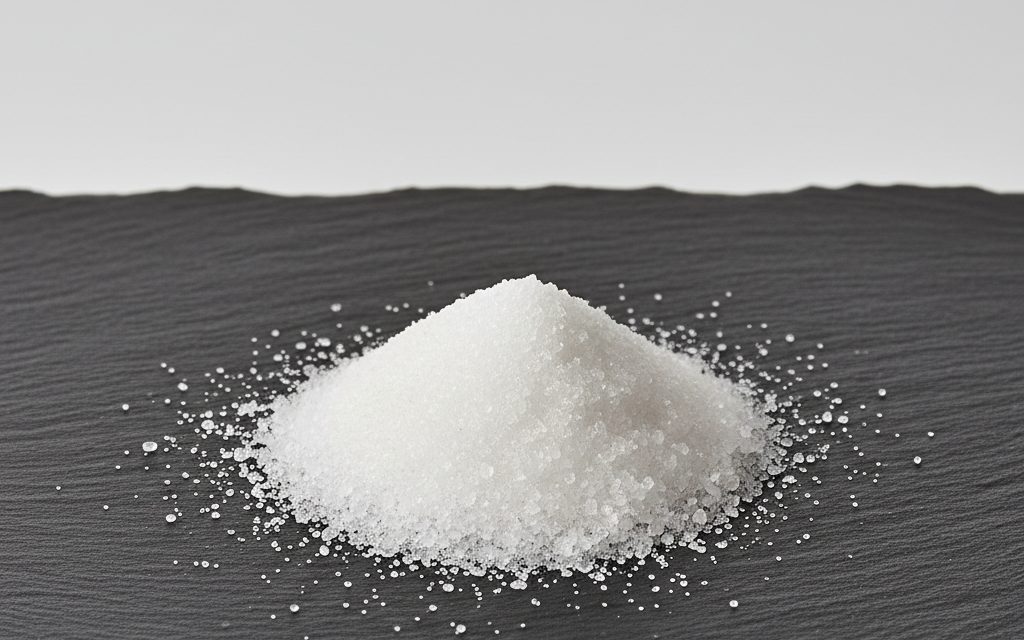
- • Certificate of Analysis is provided against the confirmed shipment, grade and batch.
- • Manufacturer TDS and SDS are subject to grade and supplier confirmation and are available on request.
- • Grades, packaging and origin above are indicative sourcing options and are confirmed at quotation.
Available grades from container-direct sourcing
Citric Acid Anhydrous — Fine Granular
Assay 99.5–100.5%, USP / BP / FCC, 30–100 mesh
Citric Acid Monohydrate
Assay 99.5–100.5%, USP / BP / FCC, 8–40 mesh
Citric Acid Powder
USP / FCC, 100 mesh — beverage and effervescent
Typical applications
- Carbonated and still beverages — acidity regulator
- Confectionery, jams and sauces
- Effervescent pharmaceutical tablets
- Dishwasher and laundry detergents — chelating agent
- Metal cleaning, descaling and passivation
- Personal care — pH adjustment and antioxidant
Why Canadian buyers choose us
- Container-direct sourcing with Ontario logistics partner — 24–48 h dispatch across the GTA
- Direct mill / refinery sourcing from tier-1 producers, no middle layer
- Full SDS, COA, food-grade / kosher / halal certificates on request
- LTL and FTL freight across Ontario, Quebec, Alberta and BC
- Volume pricing from 25 kg pails to full 20-ton container loads
Material identity
Citric acid (anhydrous / monohydrate) — identifiers and the names buyers use
- CAS (anhydrous)
- 77-92-9
- CAS (monohydrate)
- 5949-29-1
- EC / EINECS
- 201-069-1
- Food additive number
- E330 / INS 330
- Chemical formula
- C6H8O7
Also searched as
Abbreviations
Industry terminology
Identifiers are published for material identification. The exact specification of any offered grade is confirmed against supplier documentation at quotation.
Buyer intent coverage
Citric acid (anhydrous / monohydrate) — what it is, where it is used, how it is chosen
Citric acid is a weak tribasic organic acid supplied as a white crystalline powder or granule. It is the most widely used acidulant, chelating agent and pH adjuster in food, beverage, cleaning and industrial water applications, and is sold in two hydration states — anhydrous and monohydrate — which are not interchangeable in every formulation.
Primary uses
- Adjusting and buffering pH in beverage, sauce and dairy formulations
- Chelating metal ions to stabilise colour, flavour and oxidation-sensitive systems
- Descaling and acid cleaning in CIP and industrial cleaning programmes
- Sequestering hardness in detergent and household cleaning formulations
Applications
- Carbonated and still beverages, concentrates and powdered drink bases
- Sauces, dressings, canned vegetables and preserved fruit
- Dairy and processed cheese acidification
- Confectionery sour systems and effervescent tablet bases
- Clean-in-place (CIP) descaling of heat exchangers and evaporators
- Laundry, dishwash and hard-surface cleaning formulations
- Boiler and cooling-circuit acid cleaning
Advantages
- Recognised in food compendia when the correct food grade is specified
- Effective chelation across a wide pH band, unlike single-function mineral acids
- Readily soluble in water, which suits both dry blends and liquid dosing
- Handled without the corrosion controls required for strong mineral acids
Limitations to consider
- Monohydrate carries roughly 8.6% water of crystallisation, so anhydrous and monohydrate are not substituted 1:1 by weight
- Hygroscopic — extended humid exposure causes caking in fine grades
- Corrosive to some metals in concentrated solution; material compatibility must be checked
- Not a preservative on its own; antimicrobial effect is indirect through pH depression
How to choose the right grade
- Decide hydration state first — anhydrous for dry blends and low-moisture systems, monohydrate where the water of crystallisation is acceptable
- Match the grade (food / technical) to the regulated end use
- Specify granulation or mesh for dry-blend segregation and dissolution rate
- State whether an anti-caking treated grade is required for humid plants
Typical grades
- Food grade, anhydrous
- Food grade, monohydrate
- Technical / industrial grade
Comparable materials — how Citric acid (anhydrous / monohydrate) sits against alternatives
- Malic acid — smoother, longer acid profile in beverages
- Tartaric acid — sharper acidity, different solubility behaviour
- Phosphoric acid — stronger acidulant, no chelation of the same type
- Sodium citrate — buffering without the same free-acid pH drop
Comparable-material reference. Grade selection is confirmed at RFQ against your process.
Procurement coverage
How to specify, order and receive Citric acid (anhydrous / monohydrate)
Written for procurement, quality and technical buyers in Canada and the United States. No numeric price, MOQ, stock or lead-time value is published — those are confirmed per shipment in the quotation and against the confirmed batch.
How buyers specify at RFQ
- Hydration state (anhydrous or monohydrate)
- Grade (food or technical)
- Assay range and particle size / mesh
- Anti-caking treatment required or not
- Regulatory letters required for the shipment
Packaging options (industry-standard)
- Multi-wall paper or PP bag — the standard industrial dry-chemical format
- Jumbo / FIBC bulk bag for high-volume users
- Packaging options and available pack sizes are confirmed with each quotation.
Storage & handling
- Store sealed, dry and off the floor; avoid humidity swings
- Segregate from strong alkalis and oxidisers
- Rotate stock — fine grades cake before coarse grades
Documentation available
- Technical data sheet (TDS) for the offered grade
- Safety data sheet (SDS) in the format required for Canadian import
- Certificate of analysis (COA) against the confirmed batch
- Documentation is confirmed per batch at quotation; availability depends on the grade and supplier offered.
RFQ checklist for citric-acid-anhydrous-monohydrate-canada
Include these fields to receive an accurate Canada-landed quotation
- Hydration state and grade
- Annual and per-shipment volume
- Particle size / mesh requirement
- Packaging format your plant can receive
- Documentation and regulatory letters required
- Delivery province or port of discharge
Technical & procurement detail
Anhydrous vs monohydrate citric acid — picking the right one+
Citric acid anhydrous contains no water of crystallisation and is typically chosen for dry mixes, effervescent tablets and dry beverage blends where moisture must be controlled. Monohydrate (with one water molecule per acid molecule) is more cost-effective for wet processes such as liquid beverages, soft drinks, jams and detergents where the water content is irrelevant. Both ship from the same Ontario logistics partner.
Food-grade certification chain we provide+
Every lot of citric acid we sell carries a full COA from the producing mill (China, Europe or Brazil depending on availability), a USP / FCC compliance letter, kosher (OU or Star-K) certificate, halal certificate, non-GMO declaration and allergen-free statement. This is the documentation package required by CFIA-registered food facilities in Ontario.
Logistics — beverage bottlers in the GTA+
Beverage bottlers in Toronto, Mississauga, Concord and Brampton typically order on a recurring weekly schedule. We coordinate planned coverage with our Ontario logistics partner against the schedule agreed with the customer, so short-notice FIBC callouts can be planned rather than improvised. Availability for any specific callout is confirmed at the time of the request. Larger formulators take a full 20-ton FCL direct from container.
Frequently asked questions
Which is cheaper — anhydrous or monohydrate citric acid?+
On a per-kilogram basis the prices are similar, but monohydrate effectively gives you ~91% acid content (the rest being water of crystallisation). Choose anhydrous if you need to maximise acid per kg shipped.
Is your citric acid GMO-free and kosher-certified?+
Yes — every lot ships with non-GMO declaration and kosher certification (OU or Star-K depending on origin mill).
What is the shelf life of citric acid?+
Stored in a dry, sealed package below 30 °C, citric acid is stable for at least 3 years. The monohydrate form will slowly lose water at high temperatures.
Can you supply citric acid by the container load?+
Yes — we ship 20-ton FCL container loads of either anhydrous or monohydrate directly to your facility anywhere in Canada.
Technical knowledge for Citric Acid (Anhydrous & Monohydrate) Supplier — Toronto, Canada
Engineering and purchasing guidance written for this material — understand it, apply it, compare options, specify a grade, and fix production problems.
Foundation Articles
Related products
Materials commonly quoted alongside Citric Acid Anhydrous & Monohydrate by the same plants.
Acetic Acid
Organic acid / acidulant — pH adjustment in process water and formulations
Phosphoric Acid
Mineral acid — acidification and pH control in process streams
Ascorbic Acid (Vitamin C)
Organic acid / acidulant — antioxidant systems in food and beverage production
Need a quote on Citric Acid Anhydrous & Monohydrate?
Request pricing, TDS/SDS and available documentation. We usually acknowledge enquiries within one business day; samples are subject to supplier availability and product classification.
Explore solutions, technical knowledge and regional supply pages for this commodity.