
Sodium Alginate — Food Grade
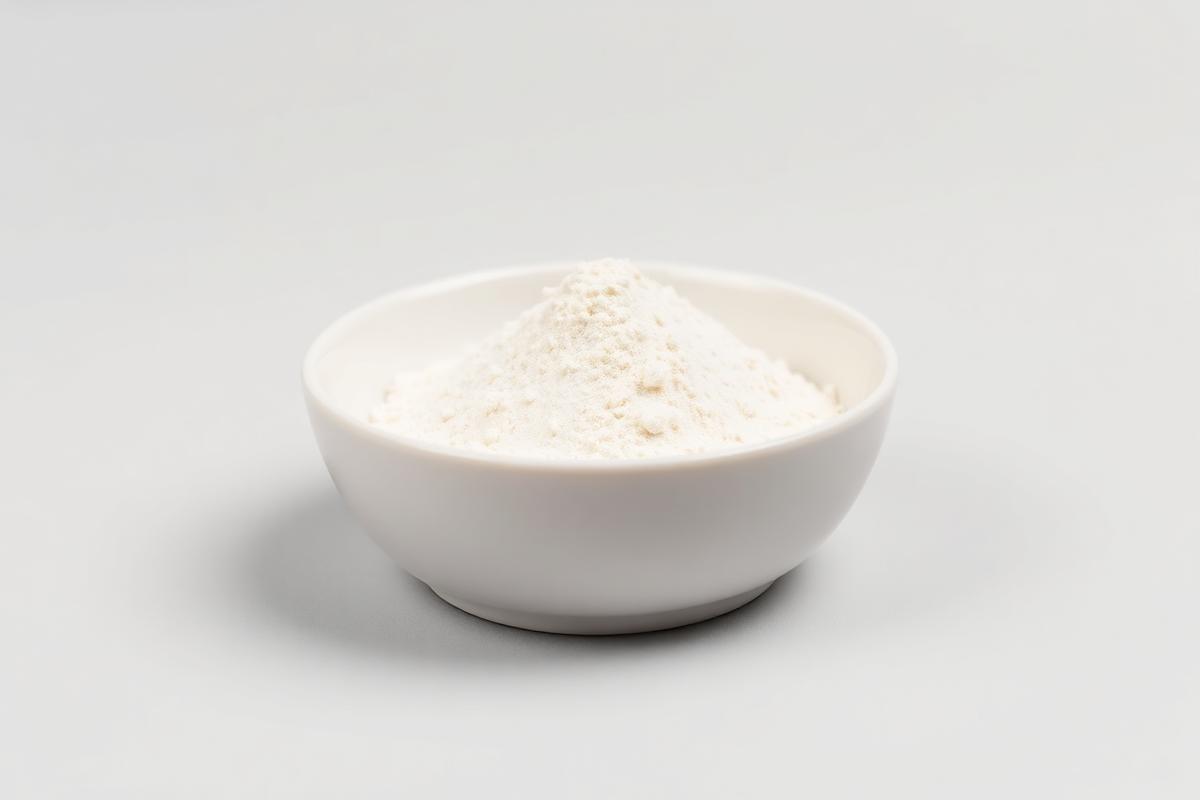
Allzone Trading supplies food grade sodium alginate to food manufacturers across Ontario, Quebec and Canada. Sodium alginate is a seaweed-derived hydrocolloid used for thickening, gelling and stabilising in food applications. Grade details are confirmed against supplier documentation at quotation.
At a glance
- Product
- Sodium Alginate
- Grades
- Food Grade
- Typical applications
- Restructured and formed food products · Sauces, dressings and fillings · Dairy and dessert products
- Packaging
- 25 kg bags
- • Certificate of Analysis is provided against the confirmed shipment, grade and batch.
- • Manufacturer TDS and SDS are subject to grade and supplier confirmation and are available on request.
- • Grades, packaging and origin above are indicative sourcing options and are confirmed at quotation.
Available grades from container-direct sourcing
Food Grade
Specification confirmed against supplier technical data sheet at quotation.
Typical applications
- Restructured and formed food products
- Sauces, dressings and fillings
- Dairy and dessert products
- Bakery creams and glazes
- Beverages requiring suspension
Why Canadian buyers choose us
- Container-direct sourcing coordinated through our Ontario logistics partner
- Supplier documentation (TDS, SDS, COA) requested and shared before order confirmation
- Specifications confirmed in writing at quotation stage — no assumed values
- LTL and FTL freight across Ontario, Quebec and Western Canada
- Quantities from single 25 kg bags to full container loads
Material identity
Sodium alginate — identifiers and the names buyers use
- CAS
- 9005-38-3
- Food additive number
- E401 / INS 401
- Source
- Sodium salt of alginic acid from brown seaweed
Also searched as
Abbreviations
Industry terminology
Identifiers are published for material identification. The exact specification of any offered grade is confirmed against supplier documentation at quotation.
Buyer intent coverage
Sodium alginate — what it is, where it is used, how it is chosen
Sodium alginate is the only widely used food hydrocolloid that forms a firm gel at room temperature purely through reaction with calcium. That single property is why it appears in restructured foods, bake-stable fillings and spherification, and it is also the basis of technical grades used in textile printing pastes and welding electrode coatings.
Primary uses
- Gelling without heat, using a calcium source
- Binding restructured and formed food pieces
- Making fillings that hold their shape through baking
- Thickening printing pastes and industrial slurries
Applications
- Restructured vegetable, meat and analogue products
- Bake-stable fruit and savoury fillings
- Spherification and encapsulation
- Textile printing paste
- Welding electrode coating
Advantages
- Sets cold — no heating or cooling cycle required
- Gel character can be tuned from brittle to elastic through the M/G ratio
- Works in low-sugar systems where high-methoxyl pectin cannot
- Bake-stable gels do not melt out during oven passage
Limitations to consider
- Uncontrolled calcium — including hard water — causes premature gelling
- Low pH degrades alginate solutions over time
- Gels are not thermoreversible, so a mis-set batch cannot be remelted
- High-viscosity grades are difficult to disperse without good shear
How to choose the right grade
- Decide the gel character first — high-G for rigid and brittle, high-M for elastic
- State whether the set is external (calcium bath) or internal (sequestered calcium)
- Give the viscosity target with test conditions and the water hardness you work with
- Match the grade family to the end use — food, textile or welding
Typical grades
- Food grade, low viscosity
- Food grade, medium viscosity
- Food grade, high viscosity
- High-G (rigid gel) grade
- High-M (elastic gel) grade
- Technical / printing grade
Comparable materials — how Sodium alginate sits against alternatives
- Low-methoxyl pectin — also calcium-set, softer and more acid-tolerant
- Carrageenan — heat-set thermoreversible gel instead
- Gellan gum — lower dose and a sharper, more brittle set
Comparable-material reference. Grade selection is confirmed at RFQ against your process.
Procurement coverage
How to specify, order and receive Sodium alginate
Written for procurement, quality and technical buyers in Canada and the United States. No numeric price, MOQ, stock or lead-time value is published — those are confirmed per shipment in the quotation and against the confirmed batch.
How buyers specify at RFQ
- Viscosity grade with full test conditions
- Gel character or M/G indication
- Calcium reactivity expectation
- Particle size and dispersion behaviour
- Food or technical grade and required documentation
Packaging options (industry-standard)
- Multi-wall paper or PP bag — the standard industrial dry-ingredient format
- Jumbo / FIBC bulk bag for high-volume users
- Packaging options and available pack sizes are confirmed with each quotation.
Storage & handling
- Store cool and dry; viscosity declines faster in warm storage
- Disperse in soft or sequestered water to avoid premature gelling
- Keep away from calcium-bearing dust in the blending area
Documentation available
- Technical data sheet (TDS) for the offered grade
- Safety data sheet (SDS) in the format required for Canadian import
- Certificate of analysis (COA) against the confirmed batch
- Allergen, non-GMO, Halal and Kosher statements where the grade supports them
- Documentation is confirmed per batch at quotation; availability depends on the grade and supplier offered.
RFQ checklist for sodium-alginate-food-grade-canada
Include these fields to receive an accurate Canada-landed quotation
- Grade and function required (thicken, gel or stabilise)
- Target viscosity or gel strength with the test conditions you measure at
- Annual and per-shipment volume
- Packaging format your plant can receive
- Documentation and regulatory letters required
- Delivery province or port of discharge
- Whether the gel must be rigid or elastic, and the calcium source you use
Technical & procurement detail
Why formulators use sodium alginate+
Sodium alginate is used where thickening, gel formation or stabilisation is required in a food system. Its behaviour depends on the formulation, including the presence of calcium sources and the process conditions applied during manufacturing.
Confirmed specifications only+
Functional values vary between grades and producers. Allzone confirms the applicable grade and its documentation with the supplier before quoting, so the values you evaluate are the values you receive.
Frequently asked questions
What packaging is available?+
Typical packaging is 25 kg bags. Other packaging can be reviewed on request.
Can I request a technical data sheet?+
Yes — request the technical data sheet and the supplier document for the quoted grade will be provided.
Do you supply alginate for gelling applications?+
Yes. Gel behaviour depends on grade and on the calcium source used in your formulation, so share the application and we will request the grade and documentation that match it.
Can you deliver to Ontario and Quebec?+
Yes. LTL and FTL freight is arranged across Ontario, Quebec and Western Canada, and container-direct supply is available for repeat volumes.
Technical knowledge for Sodium Alginate Food Grade Supplier — Canada
Engineering and purchasing guidance written for this material — understand it, apply it, compare options, specify a grade, and fix production problems.
Foundation Articles
Related products
Materials commonly quoted alongside Sodium Alginate by the same plants.
Xanthan Gum
Rheology modifier and thickener — gluten-free bakery and confectionery
Guar Gum Powder
Rheology modifier and thickener — bakery and gluten-free formulations
CMC (Carboxymethyl Cellulose)
Rheology modifier and thickener — ice cream and frozen desserts
Need a quote on Sodium Alginate?
Request pricing, TDS/SDS and available documentation. We usually acknowledge enquiries within one business day; samples are subject to supplier availability and product classification.