
Propylene Glycol Alginate
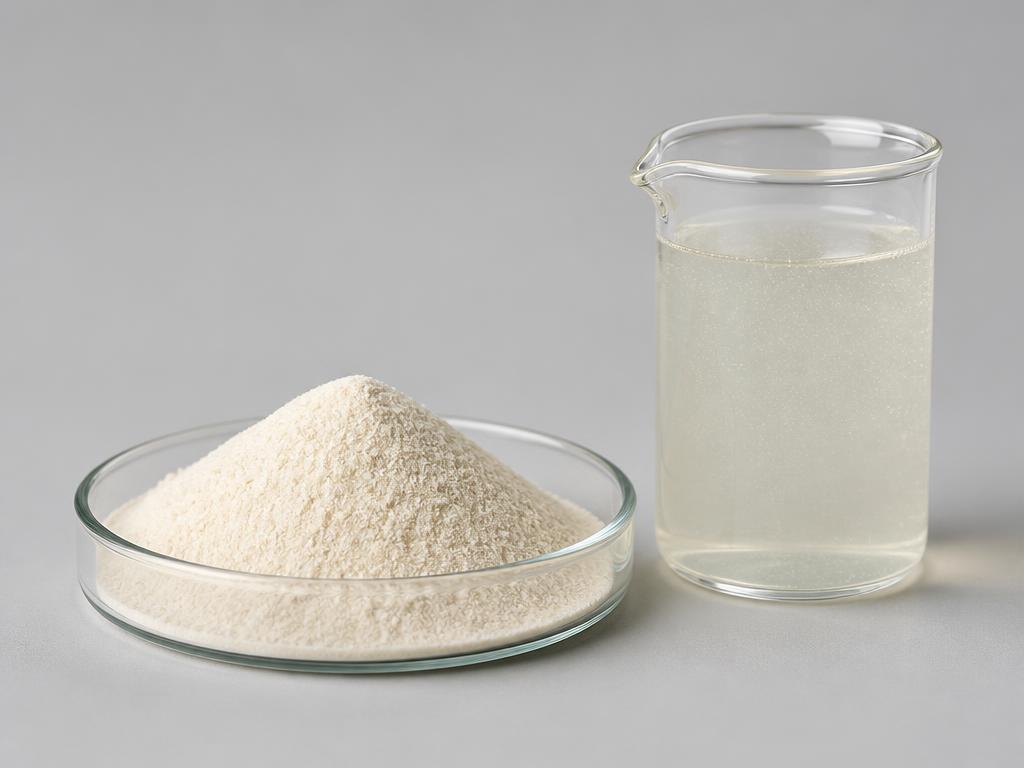
Propylene glycol alginate, commonly abbreviated PGA and identified in food additive systems as E405, is the propylene glycol ester of alginic acid — a seaweed-derived hydrocolloid that has been chemically esterified. Esterification changes how the polymer behaves: unlike the unmodified alginate salts it tolerates acidic conditions and the presence of calcium, and it carries surface activity, so it works at an oil-water or gas-liquid interface as well as in the water phase. Allzone quotes this material per enquiry: grade, packing, origin, documentation and Incoterm are decided in your quotation, not fixed by this page.
At a glance
- Product
- Propylene Glycol Alginate
- Grades
- High-ester emulsifying type · Thickening / stabilising viscosity types +1 more
- Typical applications
- Beer and sparkling beverages — foam stability · Acidified dairy, lactic acid drinks and soy protein beverages · Concentrated juices and beverage bases
- Packaging
- Packaging confirmed at quotation
- • Certificate of Analysis is provided against the confirmed shipment, grade and batch.
- • Manufacturer TDS and SDS are subject to grade and supplier confirmation and are available on request.
- • Grades, packaging and origin above are indicative sourcing options and are confirmed at quotation.
Available grades from container-direct sourcing
High-ester emulsifying type
Ester content confirmed against producer documentation at quotation
Thickening / stabilising viscosity types
Viscosity type reviewed per enquiry
Food grade documentation
Confirmed for the exact grade offered
Typical applications
- Beer and sparkling beverages — foam stability
- Acidified dairy, lactic acid drinks and soy protein beverages
- Concentrated juices and beverage bases
- Flavour emulsions and beverage emulsions
- Sauces, salad dressings and ketchup
- Ice cream and frozen beverages
Why Canadian buyers choose us
- Grade, viscosity type and documentation confirmed in writing against supplier data before order confirmation
- Technical data sheet, safety data sheet and certificate of analysis requested for the exact material offered
- Specification-led sourcing — no assumed values and no substituted grades
- Freight arranged across Ontario, Quebec and Western Canada
- Quantities reviewed per enquiry, from trial lots through to full container loads
Typical industries served
Technical & procurement detail
What PGA does in a formulation+
PGA is used where a hydrocolloid has to survive an acidic environment. In beer and other sparkling beverages it is used for foam stability; in acidified dairy and soy protein drinks it stabilises protein against settling; in dressings, sauces and flavour emulsions it works as an emulsifier and thickener at low pH where unmodified alginates would be precipitated by acid or by calcium. The correct function and use level depend on the grade and on the formulation, and are established by trial rather than assumed from this page.
What decides the propylene glycol alginate you actually need+
The degree of esterification and the viscosity type are the two decisions that matter most, because together they set whether the material behaves primarily as an emulsifier, primarily as a thickener, or as a foam and suspension stabiliser. State the pH of your system, whether calcium or protein is present, the process temperature and shear, and the shelf-life behaviour you need to hold.
Propylene glycol alginate is not propylene glycol+
These are two different commercial materials and are frequently confused. Propylene glycol is a small-molecule glycol used as a solvent, humectant and carrier, and it has its own canonical page on this catalogue. Propylene glycol alginate is a high-molecular-weight seaweed polysaccharide ester used for emulsification, foam stability and thickening. They are not interchangeable in a formulation and are never quoted as substitutes for one another. Sodium alginate, potassium alginate and alginic acid are also separate records: PGA is the esterified derivative, not an alginate salt.
What this page does not state+
This page asserts no viscosity, assay, purity, particle size, moisture, ash, degree of esterification, origin, packing, minimum quantity, certification, approval, availability or price. Every commercially meaningful value is taken from producer documentation for the exact grade offered and confirmed in writing before order.
Sourcing and origin+
Allzone sources seaweed-derived hydrocolloids through producer channels and quotes them per enquiry. Origin is selected against your technical requirement, quantity, documentation need and destination, and is stated in the offer rather than fixed by this page.
Documentation supplied with an offer+
Technical data sheet, safety data sheet and certificate of analysis for the exact grade offered are requested from the producer and shared with the quotation. Where a declaration matters to your application — food contact, pharmaceutical or cosmetic use, allergen, kosher or halal — it is confirmed for that specific grade and intended use rather than assumed from this page.
How Allzone quotes this+
Send the functional target, the application, the quantity, the destination and the documentation you need. Several hydrocolloids can be listed in one enquiry and reviewed together rather than split into separate requests.
Frequently asked questions
Does Allzone publish a price for propylene glycol alginate?+
No. Price, minimum quantity, origin, packing and lead time depend on the grade, the volume and the destination, and are confirmed at quotation. Nothing on this page is an offer.
Which grades or presentations of propylene glycol alginate can be quoted?+
High-ester emulsifying type, Thickening / stabilising viscosity types, Food grade documentation are handled inside this single product record. Grades of one material are not published as separate pages; the grade offered and its published data are confirmed in the quotation.
What documentation is available for propylene glycol alginate?+
Technical data sheet, safety data sheet and certificate of analysis for the exact grade offered are requested from the producer and shared with the quotation. Where a declaration matters to your application — food contact, pharmaceutical or cosmetic use, allergen, kosher or halal — it is confirmed for that specific grade and intended use rather than assumed from this page.
Can propylene glycol alginate be supplied into Ontario and the GTA?+
Delivery and logistics into Ontario, Quebec and the rest of Canada are reviewed per enquiry alongside the rest of the offer. We publish no stock, inventory or delivery-window guarantee on this page.
Technical knowledge for Propylene Glycol Alginate — Bulk B2B Supply | Allzone
Engineering and purchasing guidance written for this material — understand it, apply it, compare options, specify a grade, and fix production problems.
Foundation Articles
Related products
Materials commonly quoted alongside Propylene Glycol Alginate by the same plants.
Xanthan Gum
Rheology modifier and thickener — gluten-free bakery and confectionery
Guar Gum Powder
Rheology modifier and thickener — bakery and gluten-free formulations
CMC (Carboxymethyl Cellulose)
Rheology modifier and thickener — ice cream and frozen desserts
Need a quote on Propylene Glycol Alginate?
Request pricing, TDS/SDS and available documentation. We usually acknowledge enquiries within one business day; samples are subject to supplier availability and product classification.