
Microcrystalline Cellulose (MCC) — Food Grade
Allzone Trading supplies food grade microcrystalline cellulose (MCC) to food, beverage and supplement manufacturers in Ontario, Quebec and across Canada. MCC is used for suspension, heat-stable texture and as a compression aid in tableted formats. Grade type and particle size are confirmed against supplier documentation at quotation.
At a glance
- Product
- Microcrystalline Cellulose (MCC)
- Grades
- Food Grade
- Typical applications
- Suspension in dairy and plant-based beverages · Heat-stable and retorted food systems · Tableted supplements and dry blends
- Packaging
- Packaging confirmed at quotation
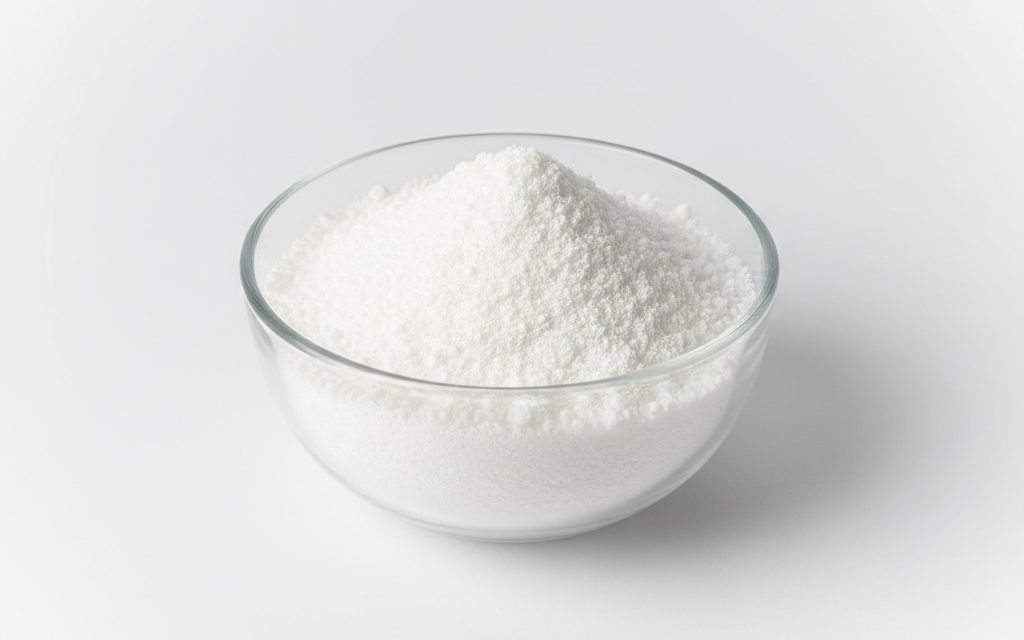
- • Certificate of Analysis is provided against the confirmed shipment, grade and batch.
- • Manufacturer TDS and SDS are subject to grade and supplier confirmation and are available on request.
- • Grades, packaging and origin above are indicative sourcing options and are confirmed at quotation.
Available grades from container-direct sourcing
Food Grade
Specification confirmed against supplier technical data sheet at quotation.
Typical applications
- Suspension in dairy and plant-based beverages
- Heat-stable and retorted food systems
- Tableted supplements and dry blends
- Sauces, dressings and fat replacement
- Frozen desserts and bakery fillings
Why Canadian buyers choose us
- Container-direct sourcing coordinated through our Ontario logistics partner
- Supplier documentation (TDS, SDS, COA) requested and shared before order confirmation
- Specifications confirmed in writing at quotation stage — no assumed values
- LTL and FTL freight across Ontario, Quebec and Western Canada
- Quantities reviewed per enquiry, from smaller lots to full container loads
Typical industries served
Material identity
Microcrystalline cellulose (MCC) — identifiers and the names buyers use
- CAS
- 9004-34-6
- Food additive number
- E460(i) / INS 460
- Source
- Purified, partially depolymerised cellulose
Also searched as
Abbreviations
Industry terminology
Identifiers are published for material identification. The exact specification of any offered grade is confirmed against supplier documentation at quotation.
Buyer intent coverage
Microcrystalline cellulose (MCC) — what it is, where it is used, how it is chosen
MCC is two products under one name. Tableting grades are chosen for compaction behaviour and flow, and drive tablet hardness at direct compression. Colloidal grades, usually co-processed with CMC, form a three-dimensional network that suspends minerals and protein through heat treatment. Ontario's pharmaceutical and supplement manufacturing base is the largest Canadian demand centre for the tableting grades.
Primary uses
- Binding and diluting in direct-compression tableting
- Supporting disintegration in tablets and capsules
- Suspending minerals and protein in heat-treated beverages
- Replacing fat and adding bulk without calories
- Preventing clumping in shredded cheese and dry blends
Applications
- Tablet and supplement manufacture
- Nutritional and dairy-analogue beverages
- Heat-stable sauces and dressings
- Shredded and grated cheese anti-caking
Advantages
- Exceptional compactability at direct compression, reducing process steps
- Colloidal grades suspend through retort and UHT where most gums fail
- Chemically inert and physiologically inactive
- Available in graded particle sizes with predictable flow
Limitations to consider
- Grades are not interchangeable — swapping a nominal 101 for a 102 changes tablet behaviour
- Colloidal grades need high shear to activate; low-shear mixing gives no suspension
- Moisture uptake affects compaction
- Pharmaceutical use requires formal qualification, so lead time for a new source is long
How to choose the right grade
- State the nominal grade and particle size your formulation is qualified against
- Give bulk and tapped density expectations
- Distinguish tableting grade from colloidal suspension grade explicitly
- Confirm the compendial standard your QA requires for the end use
Typical grades
- Tableting grades by nominal particle size
- Coarse, high-flow granular grades
- Colloidal MCC / MCC-CMC co-processed
- Food grade bulking and anti-caking
Comparable materials — how Microcrystalline cellulose (MCC) sits against alternatives
- Dicalcium phosphate — mineral diluent with different compaction
- Lactose — soluble diluent with an allergen consideration
- Powdered cellulose — bulking without the same compressibility
Comparable-material reference. Grade selection is confirmed at RFQ against your process.
Procurement coverage
How to specify, order and receive Microcrystalline cellulose (MCC)
Written for procurement, quality and technical buyers in Canada and the United States. No numeric price, MOQ, stock or lead-time value is published — those are confirmed per shipment in the quotation and against the confirmed batch.
How buyers specify at RFQ
- Nominal grade and particle size distribution
- Bulk and tapped density
- Moisture content and conductivity
- Compendial standard required
- Tableting or colloidal function
Packaging options (industry-standard)
- Multi-wall paper or PP bag — the standard industrial dry-ingredient format
- Jumbo / FIBC bulk bag for high-volume users
- Packaging options and available pack sizes are confirmed with each quotation.
Storage & handling
- Store sealed and dry; moisture changes compaction behaviour
- Qualify each new source against your own tablet press, not on paper alone
- Activate colloidal grades with sufficient shear before pasteurisation
Documentation available
- Technical data sheet (TDS) for the offered grade
- Safety data sheet (SDS) in the format required for Canadian import
- Certificate of analysis (COA) against the confirmed batch
- Allergen, non-GMO, Halal and Kosher statements where the grade supports them
- Documentation is confirmed per batch at quotation; availability depends on the grade and supplier offered.
RFQ checklist for microcrystalline-cellulose-mcc-canada
Include these fields to receive an accurate Canada-landed quotation
- Grade and function required (thicken, gel or stabilise)
- Target viscosity or gel strength with the test conditions you measure at
- Annual and per-shipment volume
- Packaging format your plant can receive
- Documentation and regulatory letters required
- Delivery province or port of discharge
- Nominal grade and whether the function is tableting or suspension
Technical & procurement detail
Functional role of microcrystalline cellulose (mcc)+
MCC is purified cellulose reduced to crystalline aggregates. Colloidal grades disperse into a three-dimensional network that suspends particles and holds texture through thermal processing; dry-binder grades provide compressibility and flow in tableting and dry blends.
Colloidal and dry-binder grades are different products+
Colloidal MCC is co-processed with a hydrocolloid so it can be activated by shear into a suspending network; dry-binder MCC is not. Substituting one for the other is the single most common MCC purchasing error, so the grade type must be specified in the enquiry.
Activation depends on your equipment+
Colloidal grades require sufficient shear to develop their network. Describe your mixing and homogenisation equipment so the supplier can confirm whether the grade under discussion can be activated on your line.
Documentation and specification+
Functional values differ between producers and grades. Allzone confirms the applicable grade with the supplier before quoting and shares the technical data sheet and safety data sheet for the exact material offered, so the values you evaluate are the values you receive.
Frequently asked questions
Is MCC the same as powdered cellulose?+
No. MCC is acid-hydrolysed to a colloidal or compressible particle; powdered cellulose remains a fibrous bulking material. Both are listed separately.
Which grade do I need for a beverage?+
Suspension in beverages normally requires a colloidal grade. Describe your product and process and the matching grade will be requested.
What packaging is available?+
Packaging is confirmed with the supplier at quotation for the grade and quantity discussed.
Can I request a technical data sheet?+
Yes — the supplier technical data sheet and safety data sheet are shared for the exact grade quoted.
Can you deliver to Ontario and Quebec food plants?+
Yes. LTL and FTL freight is arranged across Ontario, Quebec and Western Canada, with container-direct supply for repeat volumes.
Technical knowledge for Microcrystalline Cellulose MCC Supplier — Canada
Engineering and purchasing guidance written for this material — understand it, apply it, compare options, specify a grade, and fix production problems.
Foundation Articles
Related products
Materials commonly quoted alongside Microcrystalline Cellulose (MCC) by the same plants.
Xanthan Gum
Rheology modifier and thickener — gluten-free bakery and confectionery
Guar Gum Powder
Rheology modifier and thickener — bakery and gluten-free formulations
CMC (Carboxymethyl Cellulose)
Rheology modifier and thickener — ice cream and frozen desserts
Need a quote on Microcrystalline Cellulose (MCC)?
Request pricing, TDS/SDS and available documentation. We usually acknowledge enquiries within one business day; samples are subject to supplier availability and product classification.