
Stick Welding Electrodes — Covered SMAW Electrodes for Fabrication & Site Welding
Allzone Trading supplies covered stick welding electrodes to fabricators, maintenance teams, site contractors and distributors in Ontario, Quebec and across Canada. Classification, coating type, diameter and polarity are specified against your application and confirmed against supplier technical data at quotation.
At a glance
- Product
- Stick Welding Electrodes
- Grades
- Covered stick welding electrode
- Typical applications
- Site and field welding on structural steel · Maintenance and repair welding · Pipe welding, including root and fill passes
- Packaging
- Packaging format and pack weight confirmed against supplier data for the exact grade offered
- • Certificate of Analysis is provided against the confirmed shipment, grade and batch.
- • Manufacturer TDS and SDS are subject to grade and supplier confirmation and are available on request.
- • Grades, packaging and origin above are indicative sourcing options and are confirmed at quotation.
Available grades from container-direct sourcing
Covered stick welding electrode
AWS classification, coating type, electrode diameter and length, welding position capability, current type and polarity, and packaging confirmed against supplier technical data at quotation.
Typical applications
- Site and field welding on structural steel
- Maintenance and repair welding
- Pipe welding, including root and fill passes
- Heavy fabrication where portability matters
- Welding on less-clean, rusted or painted material
- Tack and fit-up welding in the shop
- Low-hydrogen welding on higher-strength or thick sections
Why Canadian buyers choose us
- Enquiries handled against your welding process, base metal and joint requirement — not a fixed stock list
- AWS classification, matching consumable and diameter confirmed in writing before order confirmation
- CWB / CSA W48 and third-party approvals confirmed for the exact manufacturer and grade offered
- Manufacturer TDS, SDS and, where applicable, certificates supplied for the item actually quoted
- LTL and FTL freight to fabricators and distributors across Ontario, Quebec and Western Canada
Typical industries served
Technical & procurement detail
What stick welding electrodes are+
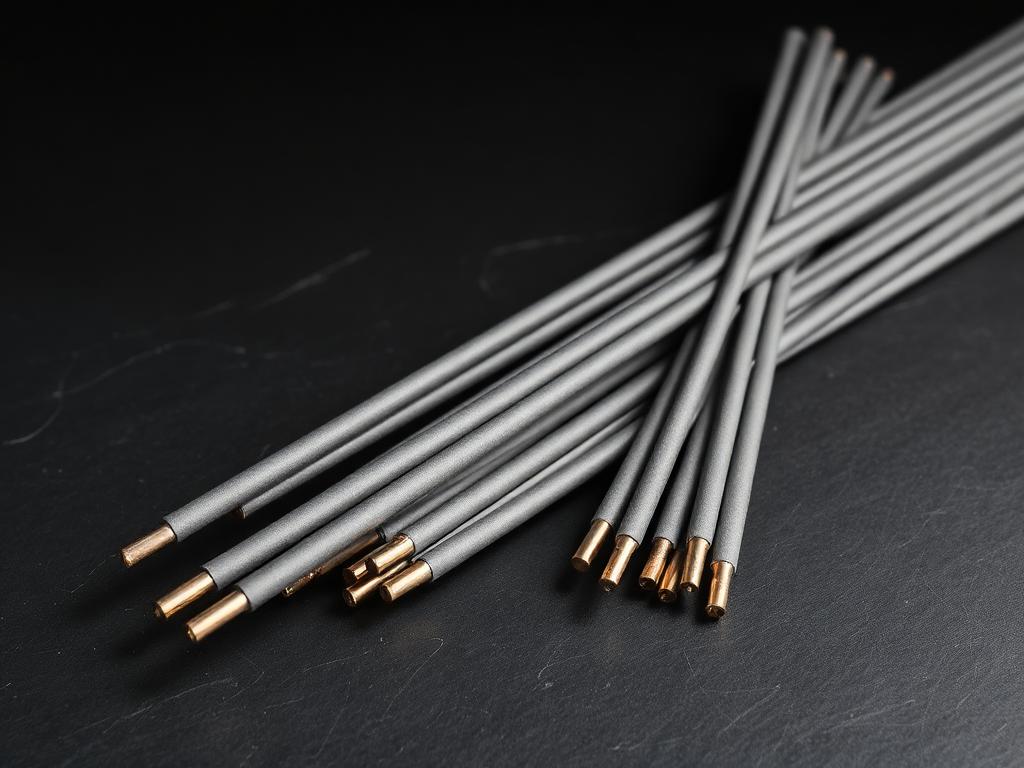
A stick electrode is a solid core wire with a bonded flux coating, used in shielded metal arc welding (SMAW). The coating burns to shield the arc, form slag over the bead and — in many classifications — add deoxidisers or alloying elements. No external gas or wire feeder is needed, which is why the process remains the default for site work, repair welding and any situation where equipment must be simple, portable and tolerant of wind and less-than-perfect material.
Coating types and how they behave+
Cellulosic coatings give a deeply penetrating, forceful arc that handles poor fit-up and vertical-down pipe work but produces relatively high hydrogen. Rutile coatings give a smooth, easy arc, tidy beads and easy slag release, which suits general fabrication and less demanding joints. Basic low-hydrogen coatings produce the cleanest, toughest deposits and are the family specified on higher-strength steels, thick sections and code work — at the cost of moisture sensitivity, which is why storage and re-drying follow the manufacturer's instructions. Classifications such as E6010, E6011, E6013 and E7018 are familiar reference points for these families and are specification options on this page, not separate products.
Diameter, position and current+
Electrode diameter is chosen against material thickness, joint size, welding position and the current the power source can deliver: smaller diameters give control on thin material, root runs and out-of-position work, larger diameters deposit faster on heavy sections in the flat position. Current type and polarity — AC, DC electrode positive or DC electrode negative — are set by the classification and must match both the electrode and the machine. Position capability is likewise part of the classification, not a general property of the product.
Low-hydrogen electrodes and storage+
Low-hydrogen electrodes are specified where hydrogen-assisted cracking is a risk — higher-strength steels, thick or restrained joints, and much code-governed work. Their performance depends on the coating staying dry, so sealed packaging, holding ovens and the manufacturer's re-drying schedule are part of correct use. Allzone publishes no re-drying schedule here: the manufacturer's instruction for the electrode actually supplied always governs.
Specification options+
Available specification dimensions include AWS classification, coating type, core alloy family (carbon steel, low-alloy and other families where specified), diameter and length, welding position capability, current and polarity, tensile and impact requirement, and packaging. Manufacturer grade names and codes remain supplier data.
Packaging+
Electrodes are normally supplied in sealed packs inside cartons, with vacuum-sealed or hermetically sealed packs common for low-hydrogen types. Pack weight and sealing format vary by manufacturer and are confirmed at quotation.
Certification and approvals+
CWB / CSA W48 certification, AWS classification and any marine or pressure-equipment approvals (ABS, DNV, LR, CCS and similar) are confirmed for the exact manufacturer, grade and, where applicable, manufacturing location offered. Allzone makes no blanket approval claim on this generic product page, and one supplier's certification is never applied to another supplier's consumable.
Documentation+
Typical documentation — manufacturer technical data sheet, safety data sheet, chemical and mechanical test certificates, impact and diffusible hydrogen data, and certification records where they exist — is provided subject to the exact supplier and grade quoted. Availability is confirmed at quotation rather than assumed.
What to include in your enquiry+
Send the base metal and thickness, joint type and welding positions, any required AWS classification, whether a low-hydrogen electrode is mandatory, tensile and impact requirements, the power source and available polarity, electrode diameter and length, whether CWB / CSA W48 approval is required, packaging preference, quantity and delivery location.
Frequently asked questions
What is the difference between E6013 and E7018 type electrodes?+
In general terms, a rutile electrode of the E6013 type gives an easy, smooth arc for general fabrication, while a basic low-hydrogen electrode of the E7018 type produces cleaner, tougher deposits for higher-strength steels, thick sections and code work — and requires dry storage and the manufacturer's re-drying discipline.
When is a low-hydrogen electrode required?+
Where hydrogen-assisted cracking is a risk: higher-strength or thicker steels, restrained joints, and work governed by a procedure that specifies a hydrogen limit. The requirement is stated in the enquiry and confirmed against the manufacturer's data.
Which electrode diameter should be used?+
Smaller diameters suit thin material, root passes and out-of-position welding; larger diameters deposit faster on heavy sections in the flat position. Diameter is chosen with the joint, the position and the current range of the machine.
Do electrodes run on AC or DC?+
It depends on the classification. Some electrodes are AC-capable, others require DC electrode positive or negative. The permitted current type and polarity come from the classification and the manufacturer's data for the electrode supplied.
How should stick electrodes be stored?+
In dry conditions and, for low-hydrogen types, in sealed packs or holding ovens with re-drying per the manufacturer's schedule. Allzone does not publish a generic schedule; the instruction for the exact electrode supplied applies.
Are the electrodes CWB or CSA W48 certified?+
Certification is manufacturer- and grade-specific. CWB / CSA W48 status and AWS classification are confirmed for the exact electrode offered, never claimed generically.
What quantities are quoted?+
Quantities are reviewed per enquiry, from trial cartons through to pallet and container programmes for fabricators and distributors.
Related products
Materials commonly quoted alongside Stick Welding Electrodes by the same plants.
MIG/MAG Welding Wire
General metal fabrication and sheet metal work
Flux-Cored Welding Wire
Structural steel fabrication and site erection welding
Need a quote on Stick Welding Electrodes?
Request pricing, TDS/SDS and available documentation. We usually acknowledge enquiries within one business day; samples are subject to supplier availability and product classification.