
Mould Sealer — Sealing Porous Masters & Moulds
Allzone Trading supplies sealers used to close porous masters and moulds before a release agent and mould rubber are applied. Sealing is the step most often skipped and most often responsible for destroyed patterns: a release agent cannot bridge open pores, and urethane in particular keys into anything unsealed. Sealer type and application method are confirmed against supplier technical data at quotation.
At a glance
- Product
- Mould Sealer
- Grades
- Confirmed at quotation
- Typical applications
- Sealing plaster and gypsum masters before rubber moulding · Sealing wood patterns and MDF mould boxes · Sealing concrete and stone before taking an in-situ mould
- Packaging
- Packaging and pack size confirmed at quotation against the grade supplied
- • Certificate of Analysis is provided against the confirmed shipment, grade and batch.
- • Manufacturer TDS and SDS are subject to grade and supplier confirmation and are available on request.
- • Grades, packaging and origin above are indicative sourcing options and are confirmed at quotation.
Available grades from container-direct sourcing
Typical applications
- Sealing plaster and gypsum masters before rubber moulding
- Sealing wood patterns and MDF mould boxes
- Sealing concrete and stone before taking an in-situ mould
- Preparing porous historic surfaces in restoration moulding
- Protecting absorbent masters from resin penetration
Why Canadian buyers choose us
- Enquiries handled against your part, mould and process — not a fixed stock list
- Grade, working properties and mix data confirmed in writing before order confirmation
- Supplier technical data sheet and safety data sheet provided for the grade actually offered
- LTL and FTL freight to studios, precast plants, fabricators and distributors across Ontario, Quebec and Western Canada
- Quantities reviewed per enquiry, from trial kits through to pallet and container programmes
Typical industries served
Material identity
Mould Sealer for Porous Surfaces — identifiers and the names buyers use
- Function
- Pore-sealing coat applied to patterns before rubber or laminate
Also searched as
Industry terminology
Identifiers are published for material identification. The exact specification of any offered grade is confirmed against supplier documentation at quotation.
Buyer intent coverage
Mould Sealer for Porous Surfaces — what it is, where it is used, how it is chosen
Sealer is the step shops skip and then regret. Plaster, wood, MDF and concrete patterns are porous, and rubber poured onto an unsealed pattern locks into the pores mechanically — the mould tears, the pattern is destroyed, or both. A sealer closes the surface so that release can do its job. It is a small purchase that protects expensive pattern work, and it is almost always bought together with the release and the mould rubber it serves.
Primary uses
- Pattern pore sealing
- Release compatibility preparation
- Detail preservation
Applications
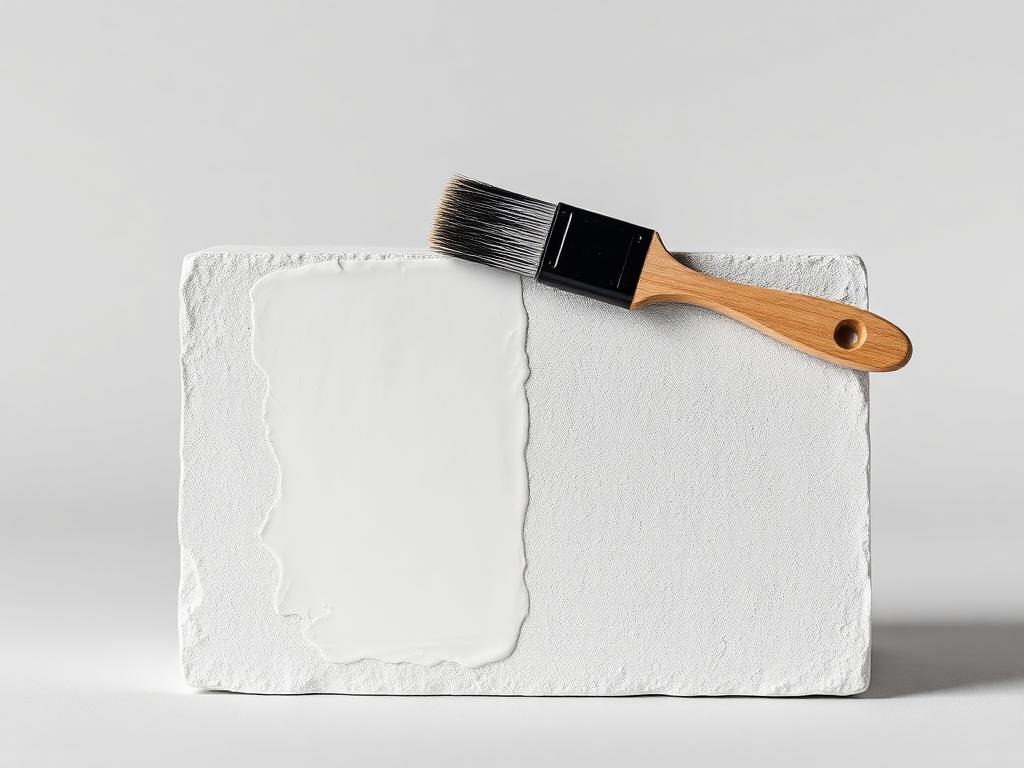
- Sealing plaster, wood, MDF and concrete patterns before mould rubber is applied
- Preparing porous masters for composite lay-up
- Protecting patterns that will be reused
Advantages
- Prevents mechanical lock between rubber and porous pattern, which is the most common cause of a destroyed pattern
- Lets release agents work as intended by giving them a non-absorbent surface to sit on
- Preserves patterns for reuse instead of treating them as consumables
Limitations to consider
- A heavy sealer coat fills fine detail, so application discipline matters on ornament work
- Not every sealer is compatible with every rubber system, and some cause cure inhibition
- Coverage, drying and compatibility are declared by the supplier for the exact product and substrate
- Decorative and architectural work is judged by eye. Colour, gloss, texture and translucency shift with batch, substrate, dosage and finishing method, so approve a physical sample panel made by your own process before a production run and keep it as the reference for later deliveries.
- Mix ratio, pot life, working time, demould time, full-cure schedule, hardness, tear strength, elongation, shrinkage, viscosity and temperature resistance are properties of one specific supplier system. They are never quoted here from memory or by analogy with a similar product; they are read from the supplier data sheet for the exact material offered and confirmed at quotation.
How to choose the right grade
- Start from the casting material and the number of parts the mould has to produce, because durability and detail pull in opposite directions
- Describe the pattern itself — its material, porosity, undercuts and whether it can be destroyed — since that decides the mould strategy before any product is chosen
- State the shop conditions the work happens in, including temperature, ventilation and whether the job is poured in a box or brushed on in place
- Name the pattern substrate and the rubber system, since the sealer has to satisfy both
- Confirm with the supplier that the sealer does not inhibit the cure of the rubber you intend to pour
- Mould-making and casting behaviour depends on the pattern, the shop temperature and humidity, the mixing method and the operator. A production-representative trial on your own pattern and in your own shop conditions is the only honest way to qualify a material before a run is committed.
- Exact specification is confirmed against supplier documentation at quotation.
Typical grades
- Solvent-borne and water-borne products as the supplier offers them
- Products the supplier matches to specific substrates and rubber chemistries
- Buyers search this category by grade name, and those names describe what the workshop needs rather than what is asserted here. Which grade a specific offer corresponds to, and what the supplier declares for it, is read from the technical documentation issued for the exact material quoted.
- Materials in this category interact: rubbers, releases, sealers, resins, pigments and fillers can inhibit cure, stain a surface or shorten mould life when they are combined outside the combinations the supplier has tested. State every material already in the process at enquiry so compatibility is checked against supplier documentation rather than discovered on the shop floor.
- Reactive materials age in the container, and moisture-sensitive systems age faster once opened. Order against real consumption rather than against a discount, and confirm the shelf life the supplier states for the exact product and pack.
Comparable materials — how Mould Sealer for Porous Surfaces sits against alternatives
- Multiple release coats on a lightly porous pattern
- Rebuilding the pattern in a non-porous material
- Shops looking for an alternative, replacement or second-source supplier should state the incumbent product, the supplier system currently approved and the property being matched. Equivalence on family name alone is not equivalence in production: cure profile, surface behaviour, colour and release characteristics all shift between sources, so a side-by-side trial is planned before a changeover.
Comparable-material reference. Grade selection is confirmed at RFQ against your process.
Procurement coverage
How to specify, order and receive Mould Sealer for Porous Surfaces
Written for procurement, quality and technical buyers in Canada and the United States. No numeric price, MOQ, stock or lead-time value is published — those are confirmed per shipment in the quotation and against the confirmed batch.
How buyers specify at RFQ
- The exact product identity and supplier system the shop needs, including the component set for a multi-part system
- The process it will be used in, and the equipment used to mix, pour, spray or apply it
- The pattern, mould or substrate it will contact, and every other material already in that process
- The properties the supplier must declare on the data sheet for your application
- The documentation set required before the material can enter production
- Exact specification is confirmed against supplier documentation at quotation.
Packaging options (industry-standard)
- Pail and drum formats are the usual industrial options for liquid systems
- Kit formats pairing the components of a two-part system are common where the shop mixes by kit
- Intermediate bulk formats are used by higher-volume producers where the plant can receive them
- Packaging options and available pack sizes are confirmed with each quotation.
Storage & handling
- Store containers closed, upright and within the temperature range the supplier states for the product
- Condition material to shop temperature before mixing; cold material behaves differently from conditioned material
- Keep moisture-sensitive components sealed, and segregate reactive components from each other in storage
- Rotate stock by receipt date and record the lot used against each production batch
- Canadian winter transport and storage matter here: several materials in this category thicken, crystallise, freeze or lose performance at low temperature, and recovery behaviour after freezing is product-specific. Confirm cold-weather handling and shop conditioning guidance against the supplier documentation before a winter delivery.
- This category includes reactive chemistry, respirable mineral dust, peroxides and solvent-borne products. Ventilation, personal protection, segregated storage and disposal requirements come from the safety data sheet for the exact product and from the requirements of the provincial regulator for your site.
Documentation available
- Technical data sheet (TDS) for the exact product offered, stating working properties as the supplier declares them
- Safety data sheet (SDS) in the format required for Canadian import, in English and French where the receiving site requires it
- Certificate of analysis (COA) or batch documentation where the supplier issues it for the confirmed lot
- Handling, mixing and storage instructions issued by the supplier for the exact system
- Test reports or conformity statements where the project specification requires them and the supplier issues them
- Documentation is confirmed per batch at quotation; availability depends on the grade and supplier offered.
- Ask for the documentation pack against the exact product at the enquiry stage rather than after the order. Documentation availability differs by supplier and by manufacturing site, and in this category the data sheet is the only place where the working properties of a system are legitimately stated.
RFQ checklist for mould-sealer-porous-surfaces-canada
Include these fields to receive an accurate Canada-landed quotation
- The exact product or supplier system required, and the incumbent it is replacing where there is one
- The process, equipment and shop conditions the material will be used in
- Volume per order and expected annual usage, so the offer is built on real consumption
- Pack format your shop or plant can physically receive and handle
- Documentation required before the material can be used in production
- Delivery province or receiving location in Canada
- The casting material the mould will be used with, and the expected number of pulls
- The pattern material and whether it is porous, sealed or single-use
- Whether the job is poured, brushed, sprayed or applied in situ
- Landed cost in Canada is driven by pack format, delivery province and receiving arrangements as much as by unit price, and dense mineral products and dilute liquids both carry weight that is not function. Quotations are compared delivered to your shop or plant rather than ex-works.
Technical & procurement detail
Why sealing comes before release+
Release agents work by forming a thin film on a closed surface. On a porous surface there is no continuous film to form — the release soaks in, the rubber or resin flows into the pores, and the mould locks mechanically to the master. Sealing creates the closed surface the release needs. Both steps are required on any absorbent substrate.
Choosing a sealer+
The sealer must be compatible with the rubber or resin to be applied over it, must not inhibit cure, and must not damage the master. Platinum-cure silicone is the strictest case: several common sealers and coatings inhibit its cure, so a small patch test on the actual sealed surface is standard practice before pouring a full mould.
Application discipline+
Deeply porous surfaces such as plaster and end-grain timber usually need more than one coat, with the first coat thinned enough to penetrate rather than bridge. Each coat must dry fully; solvent trapped under rubber causes surface defects and cure problems. The sealed surface is then released as a separate step.
Sealing historic and fragile surfaces+
In restoration work the sealer is also a protective layer, and reversibility and staining risk matter as much as performance. Test on an inconspicuous area, confirm compatibility with any conservation requirements, and document what was applied — a sealer that cannot be removed later is a permanent alteration to the original surface.
Specification options+
Working properties are configurable options within this canonical product, not separate products. Depending on the family, that can include grade, viscosity, mix ratio, pot life and demould time, hardness, colour, particle size or fibre length, and pack format. No configuration is presented as stocked or approved until it is confirmed against the supplier's technical data for the exact material offered. Supplier grade names, factory codes and manufacturer brands are not published here.
What to include in your enquiry+
Send the master or mould material, its condition and porosity, the rubber or resin to be applied over it, and whether the surface is historic or must remain unaltered.
Frequently asked questions
Do plaster masters need sealing before silicone?+
Yes. Plaster is porous; unsealed, it absorbs release and bonds mechanically to the rubber. Seal first, then apply release.
Is a sealer the same as a release agent?+
No. The sealer closes the surface; the release provides the parting film on top. Porous surfaces need both, in that order.
Can a sealer inhibit silicone cure?+
Some can, especially with platinum-cure silicone. Always patch test the actual sealed surface with the actual silicone before committing a full mould.
How many coats are needed?+
Deeply porous surfaces such as plaster and end-grain timber usually need more than one, with the first coat thin enough to penetrate. Each coat must dry completely before the next.
Can sealers be used on historic surfaces?+
They are used in restoration, but staining risk, reversibility and conservation requirements govern. Test discreetly first and record what was applied.
Are technical documents provided before ordering?+
Yes. The supplier technical data sheet and safety data sheet for the exact grade offered are provided with the quotation, and the working properties in those documents govern — not any general description on this page.
What quantities are quoted?+
Quantities are reviewed per enquiry, from trial quantities through to pallet and full container programmes for production users and distributors.
Technical knowledge for Mould Sealer Supplier — Porous Patterns | Canada
Engineering and purchasing guidance written for this material — understand it, apply it, compare options, specify a grade, and fix production problems.
Comparison Articles
Related products
Materials commonly quoted alongside Mould Sealer by the same plants.
Casting Resin Mould Release Agent
Releasing polyurethane and epoxy castings from silicone and composite moulds
PVA Release Agent
Barrier film in fibreglass and composite lay-up

Concrete Form Release Agent
Precast concrete and architectural panel production
Need a quote on Mould Sealer?
Request pricing, TDS/SDS and available documentation. We usually acknowledge enquiries within one business day; samples are subject to supplier availability and product classification.