
Membrane Filter Discs — Screen Filtration Membranes
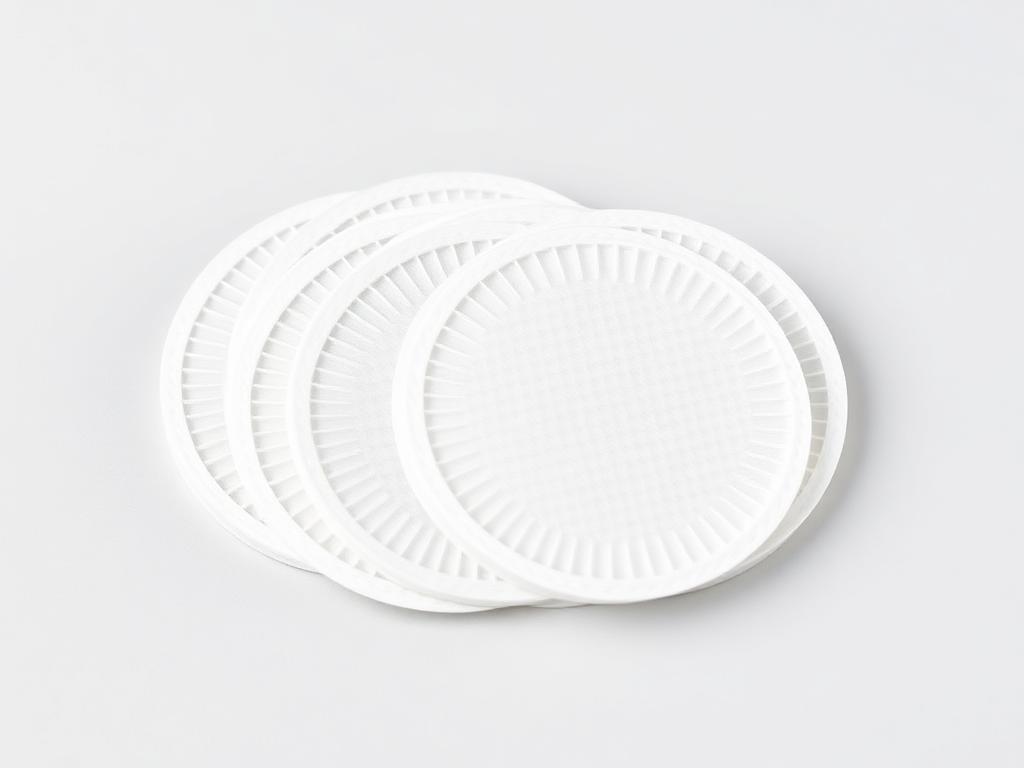
Membrane filter discs are surface filters used where a defined pore size matters — mobile phase preparation, particulate counting, solvent clarification and industrial process testing. Allzone supplies the common membrane materials, pore sizes and diameters as variants of one canonical product.
At a glance
- Product
- Membrane Filter Discs
- Grades
- Nylon membrane · PTFE membrane +4 more
- Typical applications
- Mobile phase and buffer filtration in chromatography laboratories · Particulate retention and gravimetric membrane methods · Solvent and reagent clarification in industrial QC
- Packaging
- Packaging and pack size confirmed at quotation
- • Certificate of Analysis is provided against the confirmed shipment, grade and batch.
- • Manufacturer TDS and SDS are subject to grade and supplier confirmation and are available on request.
- • Grades, packaging and origin above are indicative sourcing options and are confirmed at quotation.
Available grades from container-direct sourcing
Nylon membrane
Aqueous and mixed aqueous-organic samples. Compatibility confirmed against manufacturer documentation.
PTFE membrane
Aggressive organic solvents and non-aqueous samples.
PVDF membrane
Specified where low analyte binding is required.
PES membrane
Fast aqueous flow with low extractables.
MCE / cellulose ester membrane
Aqueous work and particulate retention applications.
Pore size and diameter
Pore size is a method parameter; diameter follows the filtration holder. Rated values are manufacturer declarations. Material, dimension, format and stated performance confirmed against the supplier product documentation for the exact item offered.
Typical applications
- Mobile phase and buffer filtration in chromatography laboratories
- Particulate retention and gravimetric membrane methods
- Solvent and reagent clarification in industrial QC
- Process and utility water sample filtration
- Sample preparation in materials and environmental testing
Why Canadian buyers choose us
- Consumables quoted against the analytical method and instrument the laboratory actually runs
- Supplier product documentation requested and shared before order confirmation
- Variants — material, pore size, diameter, thread and capacity — confirmed in writing, never assumed
- Freight arranged across Ontario, Quebec and Western Canada
- Quantities reviewed per enquiry, from single packs to annual contract volumes
Typical industries served
Material identity
Membrane Filter Discs — identifiers and the names buyers use
Also searched as
Industry terminology
Identifiers are published for material identification. The exact specification of any offered grade is confirmed against supplier documentation at quotation.
Buyer intent coverage
Membrane Filter Discs — what it is, where it is used, how it is chosen
A thin polymer membrane with a rated pore size that retains particulate at its surface. Where a method needs a defined cut-off rather than a general clean-up, this is the consumable it specifies.
Primary uses
- Retains particulate at a rated pore size at the membrane surface
- Provides a defined cut-off for methods that require one
- Supports gridded surface counting workflows in water microbiology programmes
Applications
- Water and effluent membrane filtration procedures
- Mobile phase and solution filtration in chromatography laboratories
- Particulate contamination testing in fluids and industrial cleanliness work
- Filtration steps inside standard food, feed and environmental methods
Advantages
- Gives a rated pore size, which is what methods requiring a defined cut-off are written around
- Surface retention makes gridded counting workflows possible in water testing programmes
- Available in several polymers, so the membrane can be matched to the solvent rather than the other way round
Limitations to consider
- Blinds quickly on heavily loaded samples, which usually means a pre-filter is needed rather than a different membrane
- Polymer choice affects adsorption, extractables and wetting behaviour, and the wrong choice can bias a trace-level result
- Rated pore size, chemical compatibility and any cleanliness declaration are manufacturer statements for the exact item
- Every numeric property — assay, purity, residual content, pore size, retention behaviour, ash content, extractables, thickness, capacity and dimensional tolerance — is a property of one manufactured item from one production line. Values are read from the manufacturer's own technical documentation for the exact item offered and confirmed at quotation, never quoted from a category page.
- A manufacturer declaration and a verified result are not the same thing. Declarations state what the manufacturer controls to; suitability inside your own method, matrix and instrument is established by your own verification. Where a result must stand up inside an accredited scope, plan that verification before the item enters routine use.
How to choose the right grade
- Take pore size from the method, then choose polymer from the solvent and analyte rather than from availability
- Match the diameter to the holder or funnel already in use, since changing the holder is the expensive part
- Where a gridded surface is needed for counting, confirm that explicitly rather than assuming it comes with the pore size
- Once a consumable is inside a validated method, changing it has a cost: the change has to be justified, trialled and documented. Continuity of the identical item usually matters more than unit price, so state the incumbent item and the property that must be matched when a second source is being qualified.
- Buyers frequently search using the catalogue name of a manufacturer they already use. Those are third-party trademarks belonging to their owners and are never used as an Allzone product identity. Where an equivalent is being considered, equivalence is assessed against the two sets of documentation and confirmed by the laboratory's own verification.
- Exact specification is confirmed against supplier documentation at quotation.
Typical grades
- Variant selection is made on the instrument, apparatus and test method rather than on a grade ladder
- Where a manufacturer operates distinct quality or cleanliness lines for the same item, the line is identified per offer
- Any declared property is read from the manufacturer documentation for the exact item offered, never assumed from a family name
- Regulatory listing, certification, food-contact status and any scheme approval belong to a specific item, facility and jurisdiction, and they change scope over time. State what your programme or customer requires at the enquiry stage so it is checked against current documentation for the offered item rather than assumed from a product name.
- These items are offered for industrial, food, feed, water, environmental and materials-testing work. Nothing here is offered, positioned or documented for medical, clinical, diagnostic or human-specimen use, and no such suitability is implied.
Comparable materials — how Membrane Filter Discs sits against alternatives
- Glass fibre filters for heavily loaded samples
- Syringe filters where a holder is not wanted
- Capsule filtration for larger volumes
- Two items that share a generic description are not automatically interchangeable. Construction material, dimension, format and manufacturing line all shift behaviour, so an alternative is trialled against the incumbent in your own method before it replaces it in routine work.
Comparable-material reference. Grade selection is confirmed at RFQ against your process.
Procurement coverage
How to specify, order and receive Membrane Filter Discs
Written for procurement, quality and technical buyers in Canada and the United States. No numeric price, MOQ, stock or lead-time value is published — those are confirmed per shipment in the quotation and against the confirmed batch.
How buyers specify at RFQ
- Construction material of the item, as the manufacturer declares it in current product documentation
- Nominal dimensions, capacity or thread format, matched to the instrument or apparatus in use
- Any declared performance figure — retention, pore size, ash content, temperature limit — read from manufacturer documentation for the exact item
- Cleanliness, treatment or sterility declarations where the method requires them, verified against current documentation
- Pack configuration and pack quantity, matched to how the laboratory consumes the item
- Continuity of the identical item across repeat orders, since a change of item can require method re-verification
- The instrument, apparatus or method the consumable has to serve, named exactly
- The variant axes that decide fit — dimension, capacity, thread, construction material, format
- The incumbent item where one exists, so continuity can be assessed
- The documentation or traceability the method or accreditation scope requires
- Consumption rate, so pack quantity is matched to real usage
- Exact specification is confirmed against supplier documentation at quotation.
Packaging options (industry-standard)
- Pack quantity as the manufacturer supplies the item — packs, boxes, cases or rolls
- Case and carton quantity confirmed against the item offered rather than assumed from a family
- Individual wrapping or bulk packing where the manufacturer offers both
- Packaging options and available pack sizes are confirmed with each quotation.
Storage & handling
- Store in the original packaging, closed and clean, until the point of use
- Keep away from dust, solvent vapour and anything that could contaminate the item before it reaches a sample
- Rotate by receipt date and record the lot used where the method requires consumable traceability
- Observe any storage condition or expiry the manufacturer states for the specific item
Documentation available
- Manufacturer product specification or technical data sheet for the exact item and format offered
- Certificate or declaration of conformity where the manufacturer issues one for the item
- Lot or batch documentation where the method or accreditation scope requires traceability
- Safety data sheet where the item carries one
- Documentation is confirmed per batch at quotation; availability depends on the grade and supplier offered.
- Ask for the documentation set against the exact item and pack at the enquiry stage rather than after the order is placed. What a manufacturer publishes differs between product lines, and a declaration that exists for one item in a family does not automatically exist for another.
RFQ checklist for membrane-filter-discs
Include these fields to receive an accurate Canada-landed quotation
- The instrument, apparatus or method the item serves
- The exact variant required — dimension, capacity, format, construction material
- The incumbent item and the property that must be matched, where a second source is being qualified
- Annual consumption, so pack quantity and order frequency are built on real usage
- Documentation and traceability required before the item can be used in the method
- Delivery point in Canada and the incoterm the comparison should be made on
- Pore size, membrane polymer, diameter and whether a gridded surface is required
- Consumables are compared on cost per test or cost per determination rather than on pack price. Pack quantity, consumption rate, reject and repeat-preparation rate and delivery terms all move the real figure, so offers are compared in the same pack format and on the same delivery basis.
Technical & procurement detail
What membrane filter discs does+
Unlike a depth filter, a membrane retains particles at its surface against a rated pore size, which is what makes it the right tool when the method needs a defined cut-off rather than bulk solids removal. It also means the membrane blinds quickly on a heavily loaded sample, so it is often used after a glass fibre pre-filter rather than instead of one. The polymer choice controls chemical compatibility, extractables and how much analyte the membrane adsorbs.
Choosing the right variant+
Match the membrane polymer to the solvent and analyte: nylon and MCE for aqueous work, PTFE for aggressive organics, PVDF where low binding is needed, PES where fast aqueous flow and low extractables are wanted. Pore size is set by the method, most commonly 0.22 µm or 0.45 µm. Diameter follows the filtration holder. Chemical compatibility, rated pore size and any sterility or cleanliness declaration are manufacturer statements verified against the product documentation for the exact item, and suitability in your matrix is established by your own validation.
Documentation and specification+
Laboratory consumables are qualified on documentation, not on description. Allzone confirms the manufacturer's product documentation for the exact item offered — construction material, stated dimensions, format and any declared performance or cleanliness data — before quoting. Where your method, accreditation scope or customer specification requires a particular declaration, state it at the enquiry stage so it is verified against current supplier documents rather than assumed from a catalogue page.
Frequently asked questions
How do membrane discs differ from glass fibre filters?+
A membrane retains particles at its surface against a rated pore size; a glass fibre filter traps them through its depth and holds far more solids before blinding. Heavily loaded samples are commonly pre-filtered through glass fibre and then finished through a membrane where a defined cut-off is required.
Are these products supplied for clinical or diagnostic use?+
No. Allzone supplies laboratory and QC consumables for industrial quality control, manufacturing, food and feed QC, water and process testing, materials testing and analytical sample preparation. They are not offered, positioned or documented for medical, clinical, diagnostic or human-specimen use.
Which grade or variant will I be quoted?+
The one your method requires. Share the application, the specification you work to and any customer or regulatory requirement in the RFQ, and the matching item is confirmed with the supplier before quotation.
What packaging is available?+
Packaging and pack size are confirmed with the supplier at quotation for the item and quantity discussed.
Can you deliver across Ontario and Quebec?+
Yes. LTL and FTL freight is arranged across Ontario, Quebec and Western Canada, with container-direct supply for repeat volumes.
Technical knowledge for Membrane Filter Discs Supplier — Canada
Engineering and purchasing guidance written for this material — understand it, apply it, compare options, specify a grade, and fix production problems.
Foundation Articles
Application Guides
Comparison Articles
Related products
Materials commonly quoted alongside Membrane Filter Discs by the same plants.
Quantitative Ashless Filter Paper
Gravimetric determination in materials and minerals testing

Cellulose Extraction Thimbles
Crude fat and oil determination in food and feed QC
Glass Fiber Filters
Total suspended solids determination in water and wastewater laboratories
Laboratory Sampling Bags
Raw material and finished product sampling in food manufacturing QC
Need a quote on Membrane Filter Discs?
Request pricing, TDS/SDS and available documentation. We usually acknowledge enquiries within one business day; samples are subject to supplier availability and product classification.