
Pulse Flour
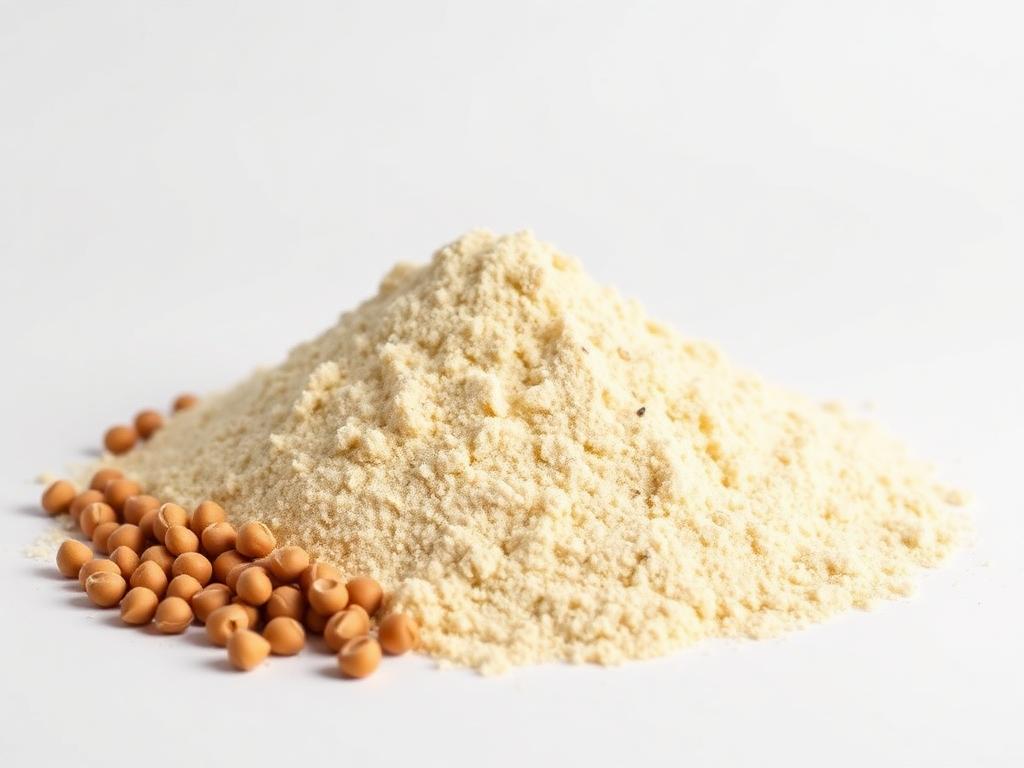
Pea, lentil, chickpea and faba flours milled to a defined particle specification. Pulse flour is milled legume, and the two decisions that define it are the pulse it comes from and how finely it is ground. Chickpea flour (besan) behaves differently in batter from pea flour; lentil flour brings its own colour; faba flour carries a distinct flavour that some applications welcome and others cannot hide.
At a glance
- Product
- Pulse Flour
- Grades
- Yellow pea flour · Chickpea flour (besan) +3 more
- Typical applications
- Gluten-free bakery and pasta · Extruded and puffed snack production · Batters, coatings and traditional foods
- Packaging
- 20 kg or 25 kg multi-wall paper bags with liner · 1,000 kg bulk bags · Palletised for container loading
- • Certificate of Analysis is provided against the confirmed shipment, grade and batch.
- • Manufacturer TDS and SDS are subject to grade and supplier confirmation and are available on request.
- • Grades, packaging and origin above are indicative sourcing options and are confirmed at quotation.
Available grades from container-direct sourcing
Yellow pea flour
Neutral base flour; the highest-volume pulse flour.
Chickpea flour (besan)
Batters, snacks and traditional South Asian foods.
Lentil flour
Red or green lentil base; colour follows the pulse.
Faba bean flour
High protein with a distinctive flavour profile.
Heat-treated / pre-cooked grades
Reduced raw flavour and enzyme activity for cold-process use.
Typical applications
- Gluten-free bakery and pasta
- Extruded and puffed snack production
- Batters, coatings and traditional foods
- Protein and fibre fortification of standard flours
- Soup, sauce and dry mix formulation
Why Canadian buyers choose us
- Enquiries quoted against your specification — class, grade and presentation, not a fixed stock list
- Specification, origin, availability and certification confirmed in writing at quotation
- Supplier documentation (COA, SDS, technical data) provided for the grade actually offered
- One point of contact from enquiry through documents, packing and shipment
- Quantities reviewed per enquiry, from bagged lots to full container and vessel programmes
Typical industries served
Material identity
Pulse flour (pea, lentil, chickpea, faba) — identifiers and the names buyers use
- Source
- Milled whole or dehulled pulses
- Types
- Yellow pea, green lentil, chickpea, faba bean
- Processing
- Raw, pre-cooked and heat-treated variants
Also searched as
Abbreviations
Industry terminology
Identifiers are published for material identification. The exact specification of any offered grade is confirmed against supplier documentation at quotation.
Buyer intent coverage
Pulse flour (pea, lentil, chickpea, faba) — what it is, where it is used, how it is chosen
Pulse flours are milled legumes bought as a protein-and-fibre-carrying flour base for gluten-free, high-protein and plant-based products. Canada's prairie pulse crop and its Saskatchewan and Manitoba milling capacity make these flours a domestic supply story, and processors in Ontario and Quebec draw on that base for snacks, pasta and bakery. Raw and heat-treated flours behave very differently — heat treatment controls enzyme activity and beany notes — so the process condition matters as much as the botanical type.
Primary uses
- Formulating gluten-free and high-protein bakery and pasta
- Providing a protein-and-fibre base for extruded snacks
- Replacing wheat flour in plant-based and specialty products
- Feeding pet and animal nutrition formulations
Applications
- Gluten-free bread, crackers and pasta
- Extruded and puffed snacks
- Plant-based patties and analogues
- Soups, sauces and prepared foods
- Pet food and animal nutrition
Advantages
- Delivers protein, fibre and starch in one clean-label ingredient
- Gluten-free and non-GMO by nature of the crop
- Supported by a strong Canadian pulse growing and milling base
- Available across several botanical types for flavour and colour choice
Limitations to consider
- Beany and bitter off-notes require management, especially in raw flours
- Water absorption and functionality vary by type, lot and mill
- Pulses are a declared allergen in some markets
- Enzyme activity in raw flour can affect shelf life and dough behaviour
How to choose the right grade
- State the botanical type and whether heat-treated flour is required
- Specify particle size — it drives both texture and mouthfeel
- Set protein, starch and fibre expectations with test methods
- Trial for flavour before committing to a supplier's grade
Typical grades
- Raw pulse flour
- Heat-treated / pre-cooked flour
- Fine-milled grade
- Organic-certified grade where documented
Comparable materials — how Pulse flour (pea, lentil, chickpea, faba) sits against alternatives
- Pea protein — concentrated protein without flour bulk
- Rice or corn flour — neutral gluten-free bases
- Oat flour — different fibre and flavour profile
- Wheat flour — conventional base where gluten is acceptable
Comparable-material reference. Grade selection is confirmed at RFQ against your process.
Procurement coverage
How to specify, order and receive Pulse flour (pea, lentil, chickpea, faba)
Written for procurement, quality and technical buyers in Canada and the United States. No numeric price, MOQ, stock or lead-time value is published — those are confirmed per shipment in the quotation and against the confirmed batch.
How buyers specify at RFQ
- Botanical type and heat treatment
- Protein, starch, fibre and moisture content
- Particle size distribution and water absorption
- Colour and flavour expectations
- Allergen, certification statements and documentation required
Packaging options (industry-standard)
- Multi-wall paper or PP bag — the standard dry-ingredient format
- Jumbo / FIBC bulk bag for high-volume users
- Fibre drum or carton for oxygen- or moisture-sensitive grades
- Packaging options and available pack sizes are confirmed with each quotation.
Storage & handling
- Store sealed, dry, off the floor and away from strong odours
- Keep food, feed and technical grades physically segregated
- Rotate stock and re-close partial bags immediately after use
Documentation available
- Technical data sheet (TDS) for the exact grade offered
- Safety data sheet (SDS) in the format required for Canadian import
- Certificate of analysis (COA) against the confirmed production batch
- Allergen, non-GMO, Halal and Kosher statements where the grade supports them
- Documentation is confirmed per batch at quotation; availability depends on the grade and supplier offered.
RFQ checklist for pulse-flour
Include these fields to receive an accurate Canada-landed quotation
- Grade family and the end use it must be legal for (food, feed, technical)
- The specification parameters you actually control against, with test method
- Annual volume and expected per-shipment quantity
- Packaging format your plant can receive and handle
- Documentation and regulatory statements required per shipment
- Delivery province or port of discharge
- Botanical type and heat treatment
- Particle size and protein target
Technical & procurement detail
What this product is and what decides quality+
Pulse flour is milled legume, and the two decisions that define it are the pulse it comes from and how finely it is ground. Chickpea flour (besan) behaves differently in batter from pea flour; lentil flour brings its own colour; faba flour carries a distinct flavour that some applications welcome and others cannot hide. Particle size is the specification that actually controls performance. A fine flour hydrates quickly and gives smooth batters and extruded snacks; a coarser grind gives texture and bite but can feel gritty in a beverage or a soft baked good. Ask for the sieve specification, not just 'fine' or 'coarse'. Heat treatment is the third variable. Untreated pulse flour carries raw legume flavour and enzyme activity; a heat-treated or pre-cooked flour is milder and behaves more predictably in cold-process applications. State which you need.
Types, classes and grades+
Yellow pea flour: Neutral base flour; the highest-volume pulse flour. Chickpea flour (besan): Batters, snacks and traditional South Asian foods. Lentil flour: Red or green lentil base; colour follows the pulse. Faba bean flour: High protein with a distinctive flavour profile. Heat-treated / pre-cooked grades: Reduced raw flavour and enzyme activity for cold-process use.
Specification basis+
Protein — Typically 20–28 % depending on the pulse; confirmed per specification. Moisture — Normally 10–12 % maximum. Particle size — Sieve specification agreed per application. Ash — Stated per specification. Microbiology — Food-grade limits including Salmonella and E. coli. Values vary by grade, crop year and supplier and are confirmed against supplier documentation at quotation.
Supply and origin context+
Canada's pulse crop base — peas, lentils, chickpeas and faba beans — supports milling capacity that produces flours for both domestic and export food manufacturing. Because the raw pulse and the milled flour come from the same supply chain, availability of a specific flour follows the availability of the underlying crop class in a given year. Origin, availability, grade and certification are confirmed at quotation for the lot actually offered — origin is a supply attribute, never an assumed property of the product.
Commercial and shipping notes+
Specify the pulse, the particle size and whether heat treatment is required — all three change the price and the lead time. · Gluten-free claims depend on the milling facility's segregation; confirm the standard your market requires. · Quoted FOB, CFR or CIF.
Documentation+
Commonly relevant documentation: Certificate of Analysis · Specification sheet and allergen statement · Certificate of Origin · Gluten-free / non-GMO declarations where applicable · Microbiological report. Availability is confirmed per order and per destination.
Frequently asked questions
What should the first enquiry for pulse flour include?+
State the quantity, the destination, the presentation you need and the parameters you buy on — protein, moisture, particle size, ash, microbiology. With those in the enquiry we can return a quotation instead of a list of questions.
Which types or grades of pulse flour are available?+
Yellow pea flour, Chickpea flour (besan), Lentil flour, Faba bean flour, Heat-treated / pre-cooked grades. All of these are grades of the same product rather than separate products; the grade is fixed at quotation.
What packaging options are available?+
20 kg or 25 kg multi-wall paper bags with liner · 1,000 kg bulk bags · Palletised for container loading. Packaging is confirmed at quotation, because it affects both protection in transit and freight cost.
Where does the material originate?+
Origin, availability, grade and certification are confirmed at quotation for the lot actually offered — origin is a supply attribute, never an assumed property of the product.
Technical knowledge for Pulse Flour — Pea, Lentil & Chickpea | Allzone
Engineering and purchasing guidance written for this material — understand it, apply it, compare options, specify a grade, and fix production problems.
Foundation Articles
Related products
Materials commonly quoted alongside Pulse Flour by the same plants.
Need a quote on Pulse Flour?
Request pricing, TDS/SDS and available documentation. We usually acknowledge enquiries within one business day; samples are subject to supplier availability and product classification.