
Pecans
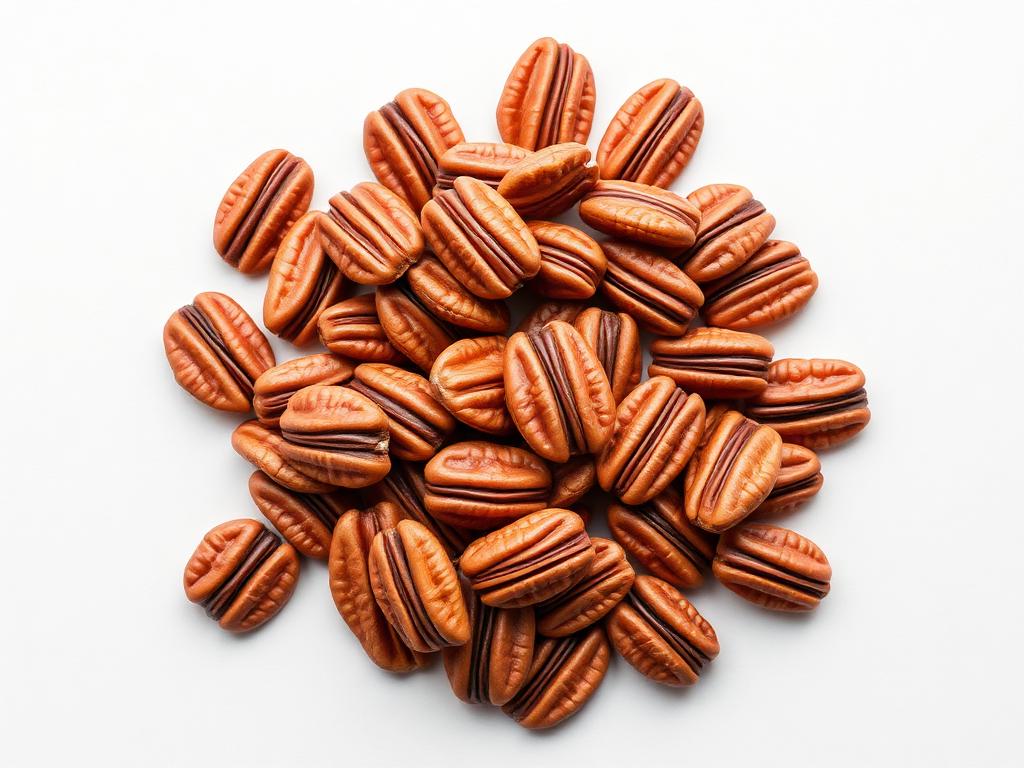
Pecan halves and pieces for bakery, confectionery, snacking and dessert manufacturing, plus in-shell lots for shellers and packers. Allzone trades this product globally on a source-anywhere, sell-anywhere basis: origin, grade, crop year, packing and Incoterm are decided in your quotation, not fixed by this page.
At a glance
- Product
- Pecans
- Grades
- Halves · Pieces +1 more
- Typical applications
- Bakery, pie and dessert manufacturing · Confectionery and pralines · Ice cream and dairy inclusion
- Packaging
- 10 kg / 11.34 kg cartons · 22.68 kg (50 lb) cartons or sacks · 25 kg bags
- • Certificate of Analysis is provided against the confirmed shipment, grade and batch.
- • Manufacturer TDS and SDS are subject to grade and supplier confirmation and are available on request.
- • Grades, packaging and origin above are indicative sourcing options and are confirmed at quotation.
Available grades from container-direct sourcing
Halves
Size- and colour-graded halves for visible topping and gifting packs
Pieces
Piece sizes for bakery inclusion, ice cream and confectionery
In-shell
In-shell lots quoted on size and shell-out yield
Typical applications
- Bakery, pie and dessert manufacturing
- Confectionery and pralines
- Ice cream and dairy inclusion
- Snacking and roasting
Why Canadian buyers choose us
- Global sourcing mandate — the same product page is worked across every qualified origin, not one supplier's list
- Specification-led quotation: you state the parameters you buy on and we quote against them
- COA, food-safety, allergen, GMO and residue documentation confirmed for the lot actually offered
- Route and landed-cost comparison before a price is issued, in any trade direction
- Bagged, bulk bag, carton and full container programmes for processors, packers and ingredient distributors
Typical industries served
Material identity
Pecans — identifiers and the names buyers use
Also searched as
Industry terminology
Identifiers are published for material identification. The exact specification of any offered grade is confirmed against supplier documentation at quotation.
Buyer intent coverage
Pecans — what it is, where it is used, how it is chosen
Pecan kernels are bought by bakery, confectionery, ice cream and premium snack producers, graded by piece format and by kernel colour. As with walnuts, colour carries a premium where the nut is visible and matters much less inside a filled or coated product. Pecans are notably rich in oil, which gives them their characteristic flavour and also makes them among the shortest-lived nuts in an ambient warehouse, so cold or controlled storage is a real cost line that should be included when comparing landed offers.
Primary uses
- Premium bakery and dessert inclusion sold largely on half size and colour
- Topping and decoration where whole halves carry the visual value
- Piece and meal formats for cost-managed inclusion
Applications
- Pie, tart and dessert manufacturing
- Bakery inclusion and topping
- Praline, candied nut and confectionery production
- Retail and foodservice packing
Advantages
- Premium flavour position that supports higher-value bakery and confectionery products
- Clear piece-format and colour tiers allow cost to be matched to product visibility
- Both halves and pieces are traded, so an inclusion line need not pay for intact halves
Limitations to consider
- Very high oil content makes rancidity development a live risk in ambient storage
- Colour grading is visual and origin-specific, so a retained approved sample is more reliable than a description
- Halves are fragile, and delivered piece integrity depends on pack format and handling in transit
- Cold or controlled storage requirements add a real cost that must be included in the landed comparison
- Purity, admixture, foreign matter, defect percentages, moisture, size or count grade, colour value and every other numeric axis are properties of one shipment from one facility. They are read from the supplier specification and the certificate of analysis for the exact lot offered, and are confirmed against a shipment sample rather than quoted here from memory.
- Allergen management is a facility question, not a product question. Where your product carries an allergen claim, confirm the supplying facility's segregation, cleaning and validation practices in writing for the exact production line rather than relying on a label statement.
How to choose the right grade
- Decide between halves and pieces based on whether the kernel is visible in the finished product
- Confirm your storage capability before buying volume, since holding conditions determine usable life
- Qualify colour against a retained sample under your own inspection conditions
- A pre-shipment sample approved by your own quality team is the only honest way to qualify a lot of an agricultural commodity. Colour, aroma, cooking behaviour and processing yield vary between crops, facilities and even between lots from the same facility, so approval works against a retained sample rather than against a description.
- Origin and crop year are the two variables that move this market most, and both belong to the specific lot being offered rather than to a web page. Buyers search by origin because origin changes appearance, behaviour and price, but the origin, harvest period and crop year of any material quoted are confirmed in the offer and in the shipping documents, never assumed from a category page.
- Exact specification is confirmed against supplier documentation at quotation.
Typical grades
- Count, size or calibre descriptions used in the trade for this nut, confirmed per offer
- Kernel format descriptions — whole, halves, pieces, blanched, sliced — as the supplier offers them
- Colour and defect classifications used in the origin market, which differ by origin
- Certified lots (organic, Halal, Kosher, non-GMO) where the supplying facility holds the certification for that lot
- Organic, Halal, Kosher, non-GMO, gluten-free and food-safety scheme certifications belong to a producing facility and to a specific lot, and they lapse, change scope and vary by shipment. State the certifications your customer or regulator requires at the enquiry stage so they are verified against current certificates for the offered material rather than assumed.
- Availability, price and quality follow the crop calendar of the producing origin, and the position of an offer in that calendar matters as much as the specification. New-crop and carry-over material behave differently in storage and in process, so the crop year is confirmed per shipment rather than treated as a constant.
Comparable materials — how Pecans sits against alternatives
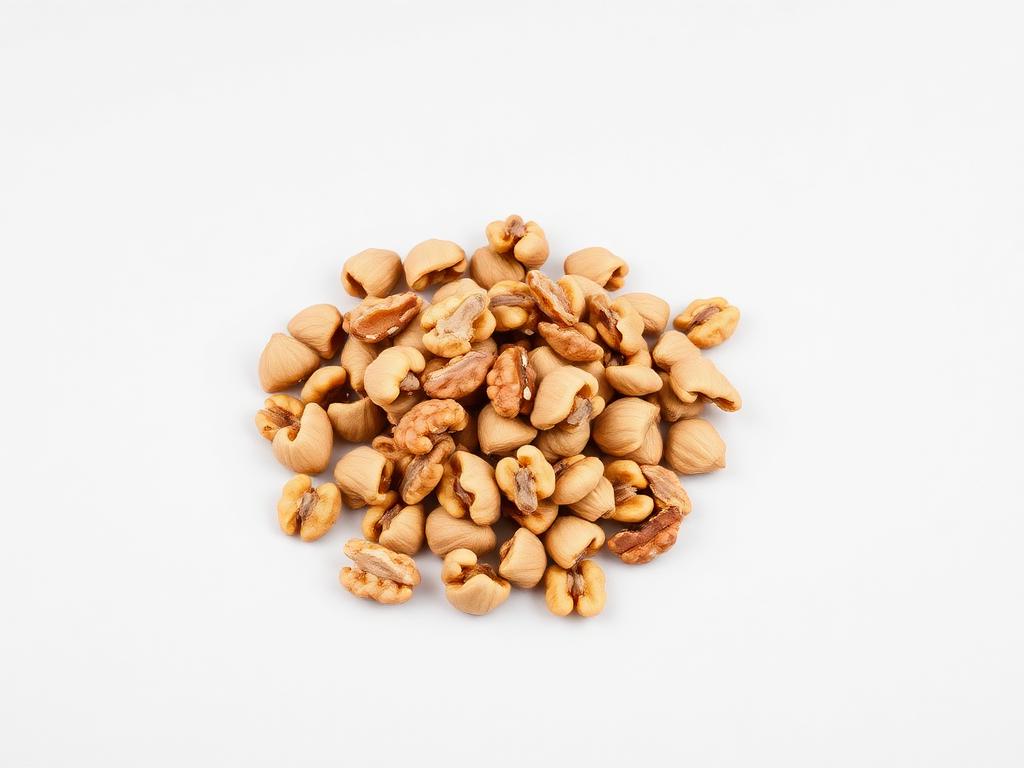
- Walnuts where the recipe permits a similar bakery inclusion
- Pieces instead of halves where appearance is not part of the product
- Alternative-origin pecans matched on the buyer's specification
- Buyers looking for an alternative or second-source supplier should state the incumbent origin, the specification currently accepted and the property that must be matched. Two lots that share a commodity name are not commercially equivalent: origin, processing and crop year all shift performance, so a trial shipment or approved sample precedes a changeover.
Comparable-material reference. Grade selection is confirmed at RFQ against your process.
Procurement coverage
How to specify, order and receive Pecans
Written for procurement, quality and technical buyers in Canada and the United States. No numeric price, MOQ, stock or lead-time value is published — those are confirmed per shipment in the quotation and against the confirmed batch.
How buyers specify at RFQ
- Form: in-shell, kernel, halves, pieces, sliced, diced, blanched or roasted, as the buyer's process requires
- Count or size description in the grading language used for this nut, as the supplier declares it
- Defect, breakage and foreign-material tolerances as stated on the supplier specification
- Aflatoxin and microbiological requirements the buyer's food-safety programme imposes on the supplier
- Allergen handling and segregation practices declared by the supplier facility
- Moisture, rancidity control and expected condition on arrival for the pack format offered
- The exact commodity, form and processing state your plant needs — whole, split, ground, hulled, milled or kernel
- The specification axes that decide acceptance in your process, and the tolerances your programme applies to them
- The origin or origins you can accept, and any origin your customer excludes
- The certifications and food-safety documentation required before the material can be used
- The pack format and delivery point your site can physically receive
- Exact specification is confirmed against supplier documentation at quotation.
Packaging options (industry-standard)
- Vacuum, gas-flushed or lined cartons where the supplier offers them for sensitive kernels
- Woven or multiwall bags for less sensitive formats
- Bulk bags where the receiving plant can handle them
- Container stuffing arrangement — palletised or floor-loaded — agreed per shipment
- Packaging options and available pack sizes are confirmed with each quotation.
Storage & handling
- Protect from heat and light; kernels and oil-rich seeds oxidise faster in warm storage
- Keep sealed and dry, away from strong-smelling materials, and store off the floor
- Manage stock against real consumption so material is used well inside the shelf life the supplier states
- Rotate by receipt date and record the lot number used against each production batch
- Stored food commodities age and are vulnerable to moisture, odour pickup and infestation. Storage conditions, rotation discipline and pest-management controls at your own warehouse determine whether a good lot stays good, and treatment history at origin is confirmed in the documentation rather than assumed.
- Long ocean transit and Canadian winter conditions both affect agricultural material: moisture migration, condensation in containers, freezing and temperature swings during inland delivery all change the condition of a lot between loading and receipt. Container preparation, liners and desiccant use are agreed with the supplier before shipment rather than debated afterwards.
Documentation available
- Supplier specification sheet for the exact lot offered, stating the axes the supplier declares
- Certificate of analysis (COA) for the shipped lot, covering the parameters your programme requires
- Certificate of origin and shipping documents for the specific consignment
- Phytosanitary, fumigation or treatment documentation where the destination or the buyer requires it
- Certification documents (organic, Halal, Kosher, non-GMO) where the lot is offered as certified
- Food-safety scheme certification for the producing or packing facility where your programme requires it
- Documentation is confirmed per batch at quotation; availability depends on the grade and supplier offered.
- Ask for the documentation pack against the exact lot at the enquiry stage rather than after the vessel sails. Documentation availability differs by origin, facility and destination requirement, and in traded food commodities the paperwork is part of the goods: a lot without the documents your programme requires cannot be used, whatever its physical quality.
- Microbiological limits, mycotoxin and pesticide-residue requirements, heavy-metal limits and allergen controls are set by your own food-safety programme and by the Canadian regulator, not by a supplier's habit. Agree the testing regime, the sampling plan and who pays for what before the shipment moves, because a rejection at destination is far more expensive than a test at origin.
RFQ checklist for pecans
Include these fields to receive an accurate Canada-landed quotation
- The exact commodity, form and specification required, and the incumbent origin where there is one
- Volume per shipment and expected annual usage, so the offer is built on real consumption
- Crop year position you need, and whether carry-over material is acceptable
- Certification and documentation set required before the material can be used
- Pack format your plant or warehouse can physically receive and handle
- Delivery point in Canada and the incoterm the comparison should be made on
- Sampling and approval process, including who approves the pre-shipment sample
- Your storage conditions and expected turn rate, so the pack format and volume suit real consumption
- Landed cost in Canada is decided by pack format, container utilisation, port of discharge, drayage and receiving arrangements as much as by unit price. Offers are compared delivered to your plant or warehouse, in the same incoterm and the same pack, or the comparison is not a comparison.
Technical & procurement detail
What this product is and where it is used+
Pecan halves and pieces for bakery, confectionery, snacking and dessert manufacturing, plus in-shell lots for shellers and packers.
What actually decides the offer+
Half-versus-piece profile, size grade, kernel colour, moisture, free fatty acid and rancidity control, and cold-chain or frozen storage requirement decide the offer. Pecans are lipid-sensitive, so storage and shipping temperature are agreed with the specification.
Forms and presentations+
Commercial forms of the same ingredient are handled inside this record, not as separate products. The form you need — and its mesh, cut, calibre or milling degree — is fixed with the specification at quotation.
Specification basis+
This page carries no purity, moisture, grade, calibre, microbiological, pesticide-residue or mycotoxin figure. Those values belong to a tested lot from a specific origin and crop, change lot to lot, and are quoted from supplier documentation for the material actually offered. Nothing here is a specification.
Origin and supply+
Country and region of origin, crop year, harvest window, processing plant and certification scheme are supply attributes confirmed per offer, never properties of this page. Multiple qualified origins can normally be worked for the same specification, and an enquiry may specify a preferred origin or state that all qualified origins are acceptable.
Global trading position+
Allzone trades this commodity as a global B2B principal: sourcing is opened to every commercially suitable origin and supply is arranged to any destination we can legally and commercially serve. Canada remains a core market, but the product is not tied to a single origin or a single destination corridor. The origin actually offered is decided by the specification, the quantity, the delivery window and the landed economics of your enquiry.
Allergen context+
Tree nuts are a declared allergen in most food regulations. This record identifies the commodity only; it makes no medical claim, no allergen-free claim and no claim of segregated handling or dedicated lines. Facility allergen controls, cross-contact management, cleaning validation and allergen statements are supplier- and plant-specific and are provided as documentation with a specific offer.
Documentation+
Certificate of analysis, specification sheet, food-safety and sanitary declarations, pesticide-residue and mycotoxin statements where the destination requires them, allergen and GMO statements, phytosanitary certificate, packing list and lot traceability. Which documents apply depends on the destination and is confirmed before an offer is treated as final.
How this product is quoted+
Every enquiry is quoted, never listed. Tell us the product, the specification or the parameters you buy on, the quantity, the destination, the packing you need, any origin preference (or that all qualified origins are acceptable) and the documents your quality team requires. We then run the global supplier search, compare routes and return a landed offer.
Frequently asked questions
What should a first enquiry for pecans include?+
State the quantity, the destination, the packing you need, the parameters you buy on and any documentation your quality team requires. With those we return a quotation instead of a questionnaire.
What decides the grade of pecans?+
Half-versus-piece profile, size grade, kernel colour, moisture, free fatty acid and rancidity control, and cold-chain or frozen storage requirement decide the offer. Pecans are lipid-sensitive, so storage and shipping temperature are agreed with the specification.
Do you supply pecans in different forms?+
Yes — halves, pieces, in-shell are handled within this same product record. Commercial forms of one ingredient are not published as separate products; the form and its processing detail are fixed at quotation.
Which origin will the material come from?+
Origin is decided per offer, not by this page. Allzone sources globally and can normally work several qualified origins against the same specification. You may state an origin preference in the enquiry, or state that all qualified origins are acceptable.
Can you supply outside Canada?+
Yes. Allzone trades as a global B2B principal — Canada is a core market, but supply can be arranged from any commercially suitable origin to any destination we can legally and commercially serve. Destination requirements are checked before an offer is confirmed.
Why are there no prices, stock levels or specifications on this page?+
Because they would be wrong the moment they were published. Price depends on origin, crop, quantity, packing, route and Incoterm; specification values belong to a tested lot. Both are issued in a written quotation against your actual requirement.
How is allergen information handled?+
Tree nuts are a declared allergen. We do not publish allergen-free or segregated-line claims. The supplier's allergen control programme, cross-contact management and allergen statement are supplied as documentation with a specific offer.
Technical knowledge for Pecans — Bulk B2B Supply | Allzone
Engineering and purchasing guidance written for this material — understand it, apply it, compare options, specify a grade, and fix production problems.
Foundation Articles
Related products
Materials commonly quoted alongside Pecans by the same plants.
Need a quote on Pecans?
Request pricing, TDS/SDS and available documentation. We usually acknowledge enquiries within one business day; samples are subject to supplier availability and product classification.