
Kaolin
Allzone Trading supplies kaolin to manufacturers, formulators and industrial buyers in Toronto, the GTA, Ontario, Quebec and across Canada. Kaolin is a clay mineral used as a flow aid, carrier and anti-caking additive in agricultural and industrial powders. Grade, physical form and documentation are confirmed against supplier technical data sheets at quotation.
At a glance
- Product
- Kaolin
- Grades
- Grade confirmed at quotation
- Typical applications
- Anti-caking of granular fertilizer · Bulk blend flow conditioning · Storage and bagging of fertilizer
- Packaging
- Packaging confirmed at quotation against the supplier specification
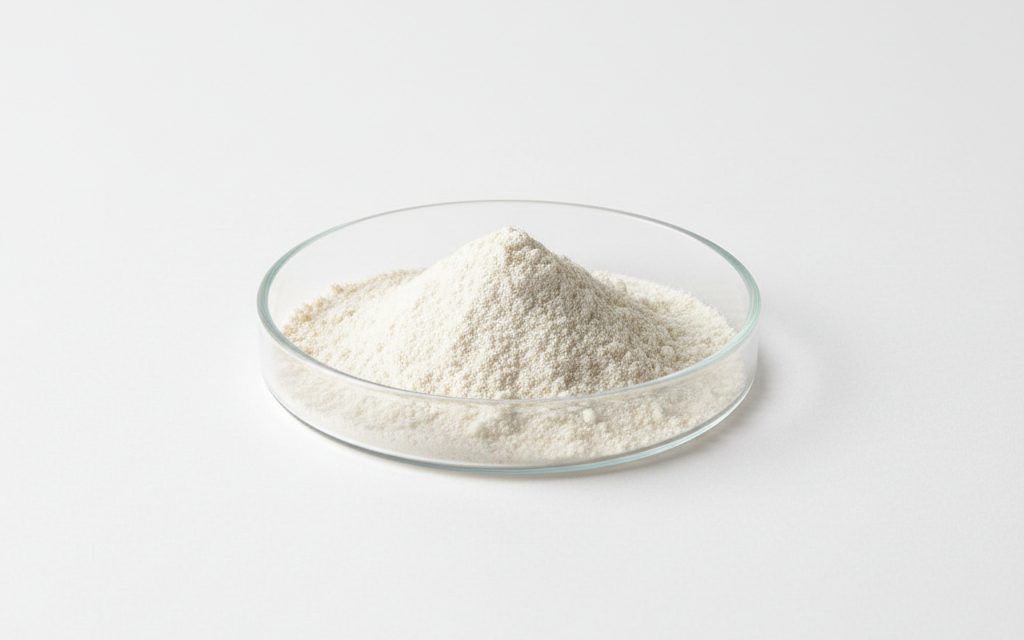
- • Certificate of Analysis is provided against the confirmed shipment, grade and batch.
- • Manufacturer TDS and SDS are subject to grade and supplier confirmation and are available on request.
- • Grades, packaging and origin above are indicative sourcing options and are confirmed at quotation.
Available grades from container-direct sourcing
Grade confirmed at quotation
Grade, physical form and specification are quoted and confirmed against the supplier technical data sheet before any order is placed.
Typical applications
- Anti-caking of granular fertilizer
- Bulk blend flow conditioning
- Storage and bagging of fertilizer
- Granulation and coating aids
- Agricultural powder handling
Why Canadian buyers choose us
- Food, feed, agricultural and industrial grades quoted as separate specifications
- Grade, physical form and documentation confirmed in writing before order confirmation
- Supplier technical data sheet and safety data sheet provided for the quoted grade
- Freight arranged across Ontario, Quebec and Western Canada
- Quantities reviewed per enquiry, from smaller lots to container loads
Typical industries served
Material identity
Kaolin (china clay) — identifiers and the names buyers use
- Mineral
- Kaolinite, a hydrated aluminium silicate
- CAS
- 1332-58-7
- Processing split
- Hydrous, calcined and surface-treated kaolins are separate commercial products
- Particle size / brightness / purity
- UNKNOWN — declared per grade on supplier documentation at quotation
Also searched as
Industry terminology
Identifiers are published for material identification. The exact specification of any offered grade is confirmed against supplier documentation at quotation.
Buyer intent coverage
Kaolin (china clay) — what it is, where it is used, how it is chosen
Kaolin is the workhorse platy mineral of the coatings, paper and polymer trades. Its plate-shaped particles lay down flat, which is why it improves coverage, barrier and surface smoothness rather than simply adding bulk. Calcining it drives off water and changes the particle into a harder, more opaque and more abrasive material — a different product with a different price, commonly used where a formulator wants to reduce titanium dioxide.
Primary uses
- Extending titanium dioxide in paints and coatings
- Filling and coating paper and board
- Improving electrical and mechanical properties in cable compounds
- Providing body and green strength in ceramic formulations
Applications
- Architectural and industrial paint manufacturing in Ontario and Quebec
- Coated paper and packaging board production at Canadian mills
- Wire and cable compound production
- Ceramics, refractories and sanitaryware bodies
Advantages
- Platy morphology delivers coverage and barrier effects that blocky fillers cannot
- Calcined grades reduce the amount of titanium dioxide a formula needs
- Chemically inert and stable across a wide processing window
Limitations to consider
- Calcined grades are more abrasive and increase wear on pumps, mills and screws
- Brightness varies between sources and is a real purchasing variable
- Not a substitute for pigment: it extends opacity, it does not create it
- Addition level and performance are established on your own material and equipment; supplier literature values are starting points for a trial, not a specification.
- Mineral powders create airborne dust during transfer and bagging. Respirable crystalline silica content varies by mineral and by grade, so it is treated as an SDS and workplace-controls question rather than a published figure, and the SDS for the exact grade offered is the governing document.
How to choose the right grade
- Start from the function the mineral has to perform in your system, not from the mineral name
- State the particle size convention your specification uses, because mesh, micron and D50 are not interchangeable
- Decide whether the grade must be coated or uncoated before you shortlist suppliers
- Confirm the brightness or colour requirement if the finished product is white or light-coloured
- Confirm the regulatory framework the finished product sits under before qualifying a grade
- Suppliers report particle size in different conventions — mesh, micron top cut, or D50 from a stated measurement method. Compare like with like, and state the convention your specification uses when you enquire.
- Exact specification is confirmed against supplier documentation at quotation.
Typical grades
- Hydrous kaolin
- Calcined kaolin
- Surface-treated kaolin
- Coating grade
- Filler grade
- Coated (surface-treated) and uncoated grades of the same mineral behave differently in a formulation. Whether a specific offered grade is treated, and with what, is confirmed on supplier documentation at quotation.
- Reference grade names circulate as shorthand in enquiries and are treated here as search language only. An equivalent is established by comparing declared datasheet values and running a trial; no grade is presented as a drop-in replacement for another.
Comparable materials — how Kaolin (china clay) sits against alternatives
- Calcium carbonate where cost per volume dominates
- Talc where a softer platy mineral is preferred
- Precipitated silica in specific opacity and matting roles
- Buyers looking for an alternative or second-source supplier should state the incumbent grade and the property being matched. Mineral fillers are rarely interchangeable on name alone: comparison depends on declared datasheet values and on a plant trial.
Comparable-material reference. Grade selection is confirmed at RFQ against your process.
Procurement coverage
How to specify, order and receive Kaolin (china clay)
Written for procurement, quality and technical buyers in Canada and the United States. No numeric price, MOQ, stock or lead-time value is published — those are confirmed per shipment in the quotation and against the confirmed batch.
How buyers specify at RFQ
- Mineral identity and the declared chemistry of the exact grade
- Particle size distribution — D50 and top cut — in the supplier's stated convention
- Coated or uncoated, and the surface treatment identity where treated
- Brightness or whiteness and the test method it is reported against
- Moisture, loss on ignition and residue on sieve as declared
- Bulk density and oil absorption where the process depends on them
Packaging options (industry-standard)
- 25 kg bag — the standard format for small and medium plants
- Jumbo / FIBC bag for compounding, dry-mix and blending operations that consume by the tonne
- Bulk truck or container load where the plant has silo intake and pneumatic discharge
- Packaging options and available pack sizes are confirmed with each quotation.
Storage & handling
- Store dry, sealed and off the floor; absorbed moisture changes flow, dispersion and dosing accuracy
- Protect bulk bags from condensation cycles between cold storage and a warm plant
- Rotate stock and record lot numbers against each production run for traceability
Documentation available
- Technical data sheet (TDS) for the exact grade offered, stating the declared particle size, brightness and moisture as the supplier reports them
- Safety data sheet (SDS) in the format required for Canadian import, including respirable dust guidance
- Certificate of analysis (COA) against the confirmed production lot
- Food-contact, feed or regulatory declaration where the end use requires it
- Documentation is confirmed per batch at quotation; availability depends on the grade and supplier offered.
RFQ checklist for kaolin-canada
Include these fields to receive an accurate Canada-landed quotation
- The material or system the mineral goes into, and the process it runs on
- The function you need it to perform and the problem you are trying to solve
- Particle size, brightness or purity window your specification calls for, in the convention your plant uses
- Annual volume and expected per-shipment quantity
- Packaging format your intake and feeding system can receive
- Documentation required per shipment
- Delivery province or port of discharge
- Whether you need a coated or uncoated grade
- The incumbent grade you are matching, if this is a second-source enquiry
- Whether your intake is bags, bulk bags or silo
- Mineral fillers have low value density, so freight, discharge point and packaging format move landed cost as much as the material price. Quotations are compared delivered to your plant, not ex-works.
Technical & procurement detail
Where kaolin is used+
Kaolin is a clay mineral used as a flow aid, carrier and anti-caking additive in agricultural and industrial powders. Allzone reviews the intended formulation or process with the supplier before quoting so the correct grade is offered.
Food, feed, agricultural and industrial grades are not interchangeable+
Food grade, feed grade, agricultural grade and industrial grade materials are supplied and quoted as separate specifications. A product supplied for one segment is not presented as suitable for another. State the intended segment and application in your enquiry so the correct grade and documentation are reviewed with the supplier.
How specifications are confirmed+
Allzone does not publish assumed purity, active content, particle size, moisture, origin, certification, regulatory approval, packaging or price values. Grade, specification and documentation are confirmed in writing against supplier technical data sheets and safety data sheets before an order is placed.
Frequently asked questions
What grade of kaolin do you supply?+
The grade and specification are confirmed at quotation against the supplier technical data sheet. No purity, specification or certification value is published in advance.
Can I request a technical data sheet and a safety data sheet?+
Yes. Both the supplier technical data sheet and the safety data sheet for the quoted grade are provided on request and should be reviewed before purchase and use.
Do you deliver kaolin across Ontario and Quebec?+
Yes. Freight is arranged across Toronto, the GTA, Ontario, Quebec and Western Canada, and the delivery method is confirmed with the quotation.
What quantities can you supply?+
Quantities are reviewed per enquiry, from smaller lots to container loads.
Technical knowledge for Kaolin Supplier — Ontario & Canada
Engineering and purchasing guidance written for this material — understand it, apply it, compare options, specify a grade, and fix production problems.
Troubleshooting Guides
Related products
Materials commonly quoted alongside Kaolin by the same plants.
Magnesium Silicate
Anti-caking and free-flow agent — anti-caking of granular fertilizer
Silicon Dioxide (E551)
Anti-caking and free-flow agent — free-flow of powdered food ingredients
Bentonite
Mineral binder and carrier — free-flow of compound feed and premixes
Zeolite
Anti-caking and free-flow agent — free-flow of compound feed and premixes
Need a quote on Kaolin?
Request pricing, TDS/SDS and available documentation. We usually acknowledge enquiries within one business day; samples are subject to supplier availability and product classification.