
Dried Hibiscus Flowers — Food Grade
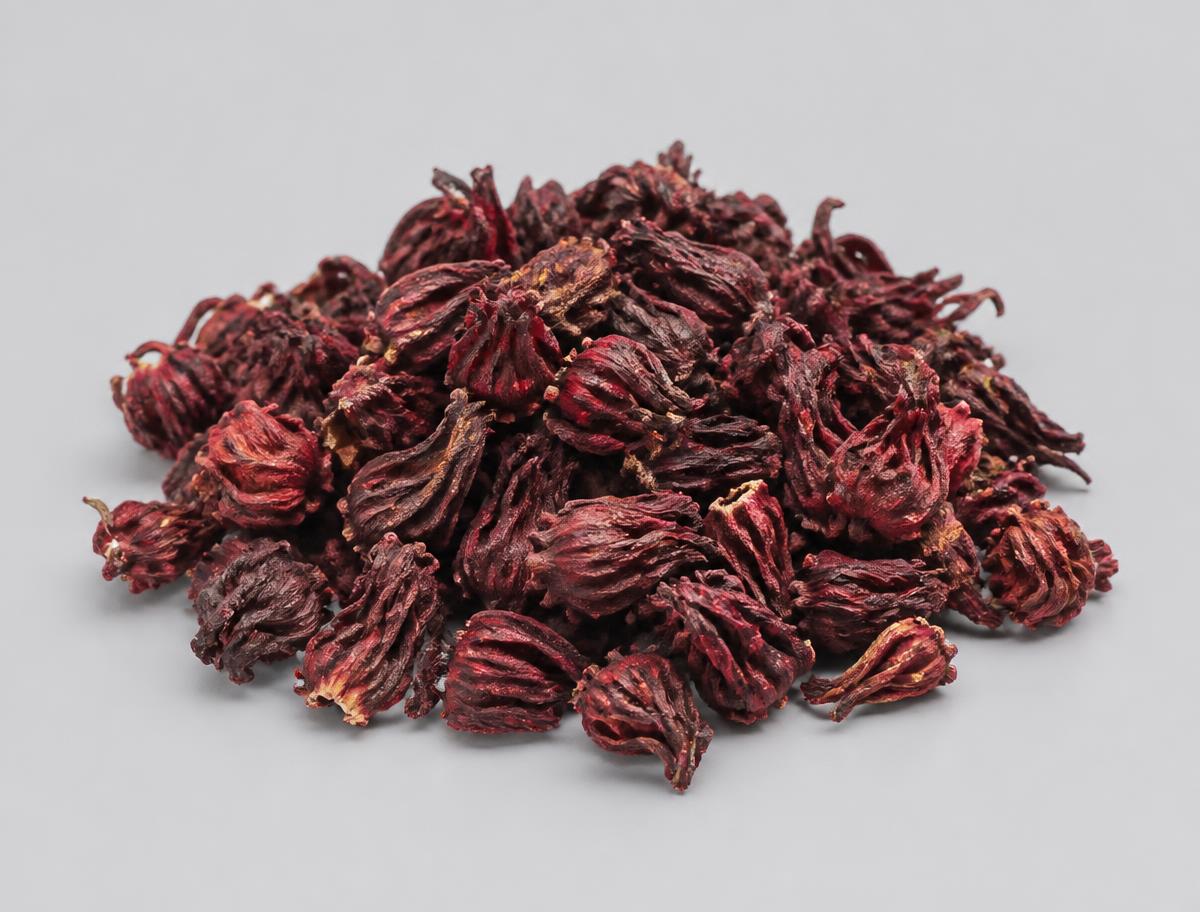
Allzone Trading supplies Dried Hibiscus Flowers as a whole dried calyces, cut or ground — form agreed at quotation to manufacturers and formulators in Canada and international B2B markets. Also referenced as Hibiscus Flowers, Dried Hibiscus, Dried Roselle Calyces, Roselle, Bissap. Dried hibiscus flowers are the dried calyces of Hibiscus sabdariffa, used in food and beverage manufacturing for their sharp acidic character and deep red water-soluble extract. Whole calyces are used where infusion appearance matters, while cut and ground forms are used where extraction rate, dosing accuracy or blend uniformity govern the process.
At a glance
- Product
- Dried Hibiscus Flowers
- Grades
- Food Grade
- Typical applications
- Herbal beverages and iced tea · Tea and infusion blends · Beverage processing and extraction
- Packaging
- Packaging confirmed at quotation
- • Certificate of Analysis is provided against the confirmed shipment, grade and batch.
- • Manufacturer TDS and SDS are subject to grade and supplier confirmation and are available on request.
- • Grades, packaging and origin above are indicative sourcing options and are confirmed at quotation.
Available grades from container-direct sourcing
Food Grade
Assay, physical form and documentation confirmed against supplier technical data sheet at quotation.
Typical applications
- Herbal beverages and iced tea
- Tea and infusion blends
- Beverage processing and extraction
- Syrups and concentrates
- Food formulations
- Natural colour and flavour applications where permitted
Why Canadian buyers choose us
- Grade, physical form and assay confirmed in writing against supplier documentation before order confirmation
- Technical data sheet, safety data sheet and certificate of analysis requested for the exact material offered
- Specification-led sourcing — no assumed values, no substituted grades
- Export documentation and destination-appropriate paperwork reviewed per enquiry
- Quantities reviewed per enquiry, from sample lots through to full commercial volumes
Typical industries served
Technical & procurement detail
What Dried Hibiscus Flowers is and what it does+
Dried hibiscus flowers are the dried calyces of Hibiscus sabdariffa, used in food and beverage manufacturing for their sharp acidic character and deep red water-soluble extract. Whole calyces are used where infusion appearance matters, while cut and ground forms are used where extraction rate, dosing accuracy or blend uniformity govern the process.
Buy on cut size and extraction behaviour, not on appearance alone+
Whole calyces, cut grades and powder behave very differently in an infusion or extraction step: finer material releases acidity and colour faster but increases fines carry-over and filtration load, while whole calyces give a slower, cleaner extraction. State the contact time, temperature and filtration equipment you run so the offered cut is matched to the process instead of to a photograph.
Colour is pH-dependent and heat-sensitive+
The red anthocyanin colour of hibiscus shifts towards dull brown-purple as pH rises and degrades with prolonged heat and light exposure. If the finished product is neutral-pH, hot-filled, pasteurised or clear-packed, the colour you see in the raw material will not be the colour in the pack. Evaluate the extract at your finished-product pH and thermal load before locking the formula.
Cleanliness parameters decide acceptance more often than flavour+
Field-dried botanicals are commonly rejected on foreign matter, stalk content, moisture and microbiological counts rather than on sensory grounds. Define your limits for extraneous matter, moisture, total plate count, yeast and mould, and any required decontamination or sterilisation regime in the enquiry, so the offer is priced and documented against the same basis you will test on receipt.
Crop-year and lot variation are normal and must be managed+
Acidity, colour intensity and calyx size vary between crop years, growing regions and drying practice. For continuous production, agree the parameters that actually drive your process, request retained-sample or lot data where the supplier can support it, and treat significant reformulation-level differences as a specification question rather than a delivery issue.
Documentation and specification+
Assay, particle size, solvent residue, microbiological limits and heavy-metal limits differ between producers and grades. Allzone confirms the applicable specification with the supplier before quoting and shares the technical data sheet, safety data sheet and certificate of analysis for the exact material offered, so the values you evaluate are the values you receive.
Frequently asked questions
What forms of dried hibiscus can be quoted?+
Whole dried calyces, cut grades and ground material are handled within this single product record. The exact cut, mesh or sieve profile is fixed with the specification at quotation rather than published as separate products.
Can hibiscus be used as a colouring ingredient?+
Hibiscus extract contributes a red to pink colour in acidic systems, but permitted use as a colouring food or colouring ingredient, and the labelling that applies, is decided by your destination market and finished-product category. Allzone provides the available supplier documentation so your regulatory team can complete its own assessment.
Do you make health claims for hibiscus?+
No. Allzone publishes no medical, therapeutic or health claim for this material. It is supplied as a food ingredient, and any claim made on a finished product is the manufacturer's responsibility.
What documentation is provided?+
The supplier technical data sheet, safety data sheet and certificate of analysis for the exact grade quoted. Additional documentation such as allergen, GMO or origin statements is requested where the supplier can support it.
What quantities can be quoted?+
Quantities are reviewed per enquiry, from sample and trial lots through to commercial volumes. Availability, pack size and commercial terms are confirmed at quotation, not before.
Technical knowledge for Dried Hibiscus Flowers Supplier | Allzone
Engineering and purchasing guidance written for this material — understand it, apply it, compare options, specify a grade, and fix production problems.
Foundation Articles
Related products
Materials commonly quoted alongside Dried Hibiscus Flowers by the same plants.
Need a quote on Dried Hibiscus Flowers?
Request pricing, TDS/SDS and available documentation. We usually acknowledge enquiries within one business day; samples are subject to supplier availability and product classification.