
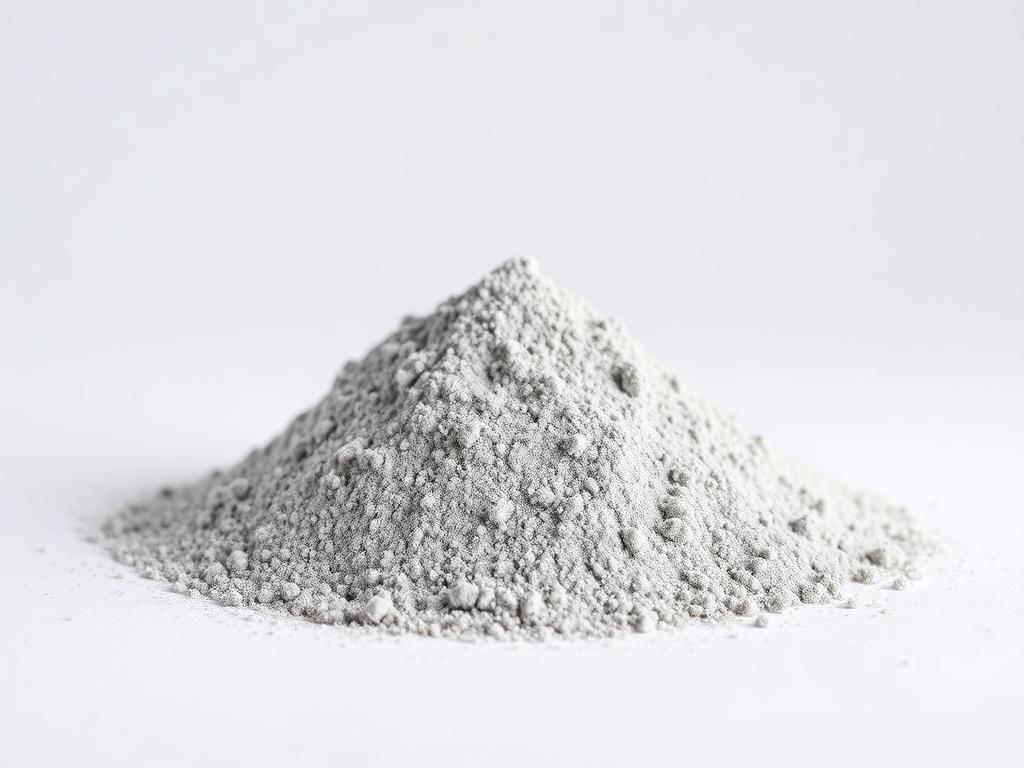
Silica Fume
Microsilica for high-strength, low-permeability concrete and refractory systems.
Indicative HS heading: 2811.22
Prices are quoted per enquiry. Availability, origin and certification are confirmed per shipment.
Product overview
Silica fume is a by-product of silicon and ferrosilicon smelting: an ultra-fine amorphous silicon dioxide powder with particles roughly a hundred times smaller than cement grains. It works in concrete in two ways at once. Chemically, it consumes calcium hydroxide from cement hydration to form additional calcium silicate hydrate. Physically, it fills the microscopic voids between cement particles, especially in the interfacial zone around aggregate.
The result is a dramatic reduction in permeability — which is really what a durability specification is buying. Chloride ingress, sulphate attack and freeze-thaw damage all depend on transport through the pore network, and silica fume closes that network. Compressive strength gains follow, but permeability is the headline.
The trade-off is workability. Silica fume concrete is cohesive and sticky, and it needs a high-range water reducer and disciplined curing — early plastic shrinkage cracking is the classic failure when a crew treats it like ordinary concrete. Typical dosage sits in the single-digit percentage of cementitious content, and going higher rarely helps.
Canadian supply context
Silica fume arises wherever silicon and ferrosilicon are smelted, and Canada — Quebec in particular — has an established smelting industry that generates this material. Collection, densification and packaging are downstream steps in the same industry.
The delivered form matters more than most buyers expect. Undensified powder has very low bulk density and is expensive to freight per tonne of active material; densified powder ships far more efficiently and suits normal silo handling; slurry removes dust handling entirely but adds water weight. Choose the form that matches your plant, not just the lowest price per tonne.
Types, grades and variants
All variants of Silica Fume are supplied from this single product record — there is no separate page or separate specification to chase.
Densified silica fume
The standard shipped form; efficient freight and silo handling.
Undensified silica fume
Highest reactivity per unit; poor bulk density and dusty to handle.
Slurry (typically ~50 % solids)
Dust-free dosing for ready-mix plants with liquid systems.
Refractory grade
Castable and gunning mix applications; specified separately from concrete grade.
Key specifications
Indicative ranges for the commodity. Lot values are confirmed on the certificate of analysis for each shipment.
- SiO₂ content
- Typically 85 %+ amorphous silicon dioxide; grade specific
- Standard
- Normally supplied to ASTM C1240 or EN 13263 as specified
- Specific surface area
- Very high — the basis of the pozzolanic effect
- Loss on ignition
- Maximum agreed per specification
- Moisture
- Low for powder grades; slurry quoted on solids content
Applications
- High-strength and high-performance concrete
- Marine, bridge and parking structures requiring low chloride permeability
- Shotcrete for tunnelling and slope stabilisation
- Refractory castables and gunning mixes
- Grouts, repair mortars and oil-well cementing
Packaging & supply options
- 20–25 kg bags, palletised
- 500–1,000 kg bulk bags
- Bulk tanker or container for densified powder
- IBC or bulk for slurry
Export & commercial notes
- State the standard (ASTM C1240 or EN 13263) your specification calls for — conformity is contractual, not implied.
- Choose the form for your plant: densified for silos, slurry for liquid dosing, undensified only where handling is controlled.
- Quoted FOB, CFR or CIF.
Documentation
Commonly relevant documents. Availability is confirmed per order and destination.
- Certificate of Analysis
- Conformity certificate to ASTM C1240 / EN 13263 where specified
- Safety Data Sheet
- Certificate of Origin
Related industries
Ready to price Silica Fume?
Send the specification you already have — even a single line is enough to start. Attach a previous datasheet, tender document or purchase specification if you have one.